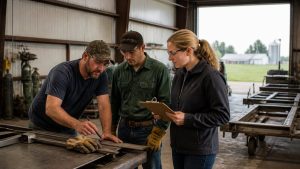


A machine can sit idle for a day and put production behind for a week. That is why a guide to industrial hiring needs to start with the real cost of a bad process – open roles that drag on, rushed offers, and new hires who are not built for the job or the environment.
In manufacturing, engineering, and skilled trades, hiring is rarely just about filling a seat. You are balancing output, safety, quality, team fit, shift coverage, and the reality that strong candidates often have options. The companies that hire well are not always the ones paying the most. More often, they are the ones with a clear process, realistic job requirements, and fast, respectful communication.
What makes industrial hiring different
Industrial hiring is harder than general office hiring because the margin for error is smaller. A resume may look good on paper, but the wrong CNC machinist, maintenance technician, controls engineer, or production supervisor can create downtime, scrap, safety concerns, and turnover that ripples through the operation.
There is also a practical challenge. Many industrial roles require a mix of technical skill, reliability, schedule flexibility, physical capability, and comfort in a specific plant culture. Someone can be technically qualified and still be a poor fit for your operation. The opposite can also be true. A candidate with the right foundation and attitude may outperform a more experienced applicant in a matter of months if training and leadership are in place.
That is why a good guide to industrial hiring should avoid one-size-fits-all advice. Hiring for a first-shift maintenance mechanic in Akron is not the same as hiring a process engineer in Columbus or a plant manager in Cincinnati. The local labor market, pay expectations, commute tolerance, and competition all shape the outcome.
Start with the role, not the replacement
One of the most common hiring mistakes is trying to refill the last person’s position without rechecking what the job actually requires today. Production changes. Equipment changes. Team structure changes. If your posting still reflects a role from three years ago, you are recruiting for a problem that may no longer exist.
Before you post, sit down with the hiring manager and define the non-negotiables. Which skills are truly required on day one? Which can be trained in 30 to 90 days? What does success look like in the first six months? What shift, travel, certification, lifting, or overtime expectations need to be stated clearly?
This sounds basic, but it saves time. When job requirements are inflated, applicant flow drops and good people screen themselves out. When requirements are too vague, you spend hours reviewing unqualified resumes. Precision beats broad language every time.
Write job descriptions that attract the right people
Industrial candidates are usually scanning for facts, not marketing language. They want to know what the job is, what the schedule looks like, what the plant environment is like, and what the pay range and advancement path look like. If those details are missing, many will move on.
A strong job description should be direct. Use the real title candidates search for. Describe the equipment, systems, or production environment they will work with. Be honest about shift, overtime, weekends, travel, and physical demands. If your company offers training, stable hours, modern equipment, or strong benefits, say so plainly.
There is a trade-off here. You want to sell the opportunity, but overselling creates mistrust. Industrial candidates tend to know quickly when a recruiter or employer is glossing over the hard parts of the job. Clear expectations improve both acceptance rates and retention.
Speed matters more than most teams realize
The best industrial candidates do not stay available for long. A maintenance tech with solid troubleshooting skills, a quality engineer with the right sector background, or a dependable welder with strong attendance can move through the market quickly. If your process takes two weeks to review resumes and another week to schedule interviews, you are likely meeting your second or third choice.
That does not mean skipping due diligence. It means tightening the process. Review applicants quickly. Set interview blocks in advance. Keep decision-makers aligned so feedback does not stall. If testing is part of your process, make sure it adds value rather than delay.
Fast hiring is not just about speed to offer. It is about speed to clarity. Candidates are more likely to stay engaged when they know where they stand, what the next step is, and when they will hear back.
Screen for fit in the real world
Technical ability matters, but industrial hiring decisions should not stop there. In many plants, the long-term difference between a successful hire and a short-term one comes down to work habits, communication, coachability, and consistency.
Interview questions should reflect the job environment. Ask how the candidate handles breakdowns under pressure, shift handoffs, changing priorities, production deadlines, or quality issues. If attendance is critical, address it directly. If teamwork across maintenance, production, and engineering is part of the job, ask for specific examples.
It also helps to separate must-have skills from preference-based filters. Requiring the exact same industry background can narrow the pool too far, especially in tighter labor markets. Sometimes the better hire comes from an adjacent environment with transferable experience and a strong record of reliability.
Compensation is not just hourly rate
Pay matters. In industrial hiring, it often matters immediately. But compensation is broader than the posted number. Shift premium, overtime consistency, benefits, bonuses, training, tool allowances, schedule stability, and commute all affect whether a candidate says yes.
If your offer acceptance rate is low, the issue may not be simple underpayment. It may be that competitors are clearer, faster, or more flexible. It may also be that your pay range is fine for an active job seeker but not strong enough to move a passive candidate out of a stable role.
This is where market knowledge matters. In Ohio, hiring conditions can vary meaningfully by region and role. A pay strategy that works in one area may not hold up in another, especially for specialized technical talent.
Do not let onboarding undo the hire
A solid hiring process can still fail if onboarding is disorganized. In industrial settings, the first few days shape how a new employee views safety, leadership, expectations, and whether the company keeps its word.
Basic things matter. Is the workstation ready? Are tools, badges, PPE, and logins available? Does the supervisor know the start date and have a training plan? Has someone explained attendance policy, break structure, reporting lines, and performance expectations in plain language?
Many employers focus heavily on recruiting and treat onboarding as administrative cleanup. That is expensive. Early turnover often traces back to confusion, poor communication, or a disconnect between what was promised and what actually happened.
When to use a specialized recruiting partner
Not every open role requires outside help. But when hiring is urgent, highly technical, confidential, or repeatedly unsuccessful, a specialized recruiting partner can reduce wasted time.
The key word is specialized. Industrial and engineering hiring works best when the recruiter understands the difference between a controls technician and an industrial electrician, or between a manufacturing engineer and a quality engineer. That knowledge improves candidate screening, saves interview time, and leads to stronger matches.
For Ohio employers, that local understanding matters too. Commuting patterns, wage pressure, plant competition, and candidate availability are not identical across markets. Firms such as IntegrityJobs.com have built their approach around technical and industrial hiring, which is often what employers need when general recruiting methods keep producing the wrong fit.
A practical guide to industrial hiring for better retention
Retention starts before day one. It begins with accurate job descriptions, honest interviews, realistic expectations, and managers who know how to welcome and develop new people.
If you want stronger retention, review where hires tend to break down. Are candidates turning down offers because the process is too slow? Are new employees leaving in the first 90 days because the job was misrepresented? Are supervisors hiring only for experience and overlooking attitude or trainability? Those patterns usually point to process issues, not just labor shortages.
The strongest industrial hiring systems are not flashy. They are disciplined. They define the role clearly, move fast, communicate well, screen for real-world fit, and treat candidates with respect. That approach helps employers hire better people, and it helps skilled professionals find jobs where they can actually succeed.
A good hire should make the operation stronger, not create another problem to solve. If your process is not doing that consistently, it is worth fixing now – before the next vacancy costs you more than the last one.