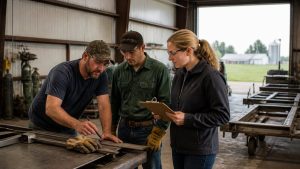


A production schedule can look solid on paper until one vacant maintenance technician, CNC machinist, or controls engineer puts it at risk. That is the practical reality behind skilled labor shortage trends across Ohio. For manufacturers and industrial employers, the issue is not simply finding more applicants. It is finding people with the hands-on capability, technical judgment, safety mindset, and reliability needed to contribute quickly.
The shortage affects every stage of hiring. Open roles stay open longer. Existing teams absorb more overtime. Supervisors spend time interviewing candidates who do not have the required experience. Candidates with the right background often receive several calls at once and can move quickly if an employer is slow to respond.
Ohio remains a strong manufacturing state, with opportunities across machining, maintenance, automation, engineering, quality, welding, and production leadership. That strength also creates competition. Employers are often pursuing the same limited group of experienced technical professionals.
The Skilled Labor Shortage Trends Employers Need to Watch
The current shortage did not emerge from one cause, and it will not be solved by one tactic. Several forces are working together, which is why a job posting alone rarely produces dependable results for hard-to-fill industrial roles.
Retirement is removing experience, not just headcount
When an experienced electrician, toolmaker, manufacturing engineer, or maintenance leader retires, a company loses more than an open position. It loses plant-specific knowledge: how a line behaves under pressure, which preventive maintenance task cannot be delayed, and how to diagnose a recurring issue before it becomes downtime.
Replacing that person with an entry-level hire may be the right long-term move, but it is not an immediate like-for-like replacement. Newer workers need training, exposure, and time. Employers that have not built a succession plan can feel the impact most sharply when several veteran employees leave in a short period.
Technical work is changing faster than talent pipelines
Modern manufacturing is more automated, data-driven, and interconnected than it was a generation ago. A maintenance role may now require electrical troubleshooting, PLC familiarity, mechanical repair, and comfort working around automated systems. A machinist may need programming knowledge in addition to setup and inspection skills.
That combination raises the bar. Employers need people who can operate in a more technical environment, while training programs and apprenticeships need time to develop those capabilities. The result is a gap between the skills a facility needs today and the skills available in the local market.
Candidate expectations have changed
Pay matters, particularly when candidates have multiple offers. But compensation is only one part of the decision. Skilled workers also evaluate shift schedules, commute length, overtime requirements, equipment condition, workplace safety, supervisor quality, benefits, and whether the role offers a real path forward.
For some candidates, a first-shift role with predictable hours is worth more than a slightly higher wage on a rotating schedule. Others may prioritize overtime opportunity, advanced equipment, or a chance to move into leadership. There is no universal offer that wins every candidate. Clear communication about the actual job is more valuable than a polished but vague description.
The competition is broader than the factory next door
A qualified controls technician in Akron or Cleveland may be approached by manufacturers, logistics operations, utilities, service companies, construction firms, and system integrators. Engineers can also have options outside traditional plant environments. Employers that define their competition too narrowly may underestimate what candidates are comparing.
This does not mean every company must be the highest payer in the market. It does mean leaders should understand their total employment proposition and be prepared to explain it honestly. A stable organization, capable leadership, clean facility, well-maintained equipment, and a respectful culture can be meaningful advantages when they are real and communicated well.
What the Shortage Means on the Plant Floor
The business impact is visible long before a role is officially called critical. When staffing is thin, preventive maintenance can be postponed, training can be rushed, and experienced workers can become overloaded. Quality issues, turnover, absenteeism, and missed production targets often follow.
The most expensive cost is not always the vacancy itself. It may be the decision to hire someone who is technically unprepared, poorly aligned with the shift, or unlikely to stay. A bad fit consumes supervisor time, affects team morale, and restarts a hiring process that was already difficult.
That is why speed and selectivity must work together. Moving quickly does not mean lowering standards. It means defining the true requirements before recruiting begins, reviewing qualified people promptly, and giving candidates a clear path through the process.
A Better Response to Skilled Labor Shortage Trends
Employers can improve results by treating hiring as an operating priority rather than an administrative task. The first step is separating essential requirements from preferences. If a role truly requires five years of hydraulic troubleshooting experience or a specific certification, state it. If the team can train a mechanically strong candidate on a particular machine or software system, make room for that possibility.
This distinction expands the viable candidate pool without compromising quality. It also helps hiring managers avoid losing capable people because a resume does not match every line of an overly narrow job description.
Build realistic hiring profiles
Before starting a search, align leadership, HR, and the direct supervisor on the role. Discuss the equipment, shift, compensation range, non-negotiable skills, trainable skills, physical requirements, and the reason the position is open. If turnover has been a problem, address it directly. Candidates will ask, and vague answers create doubt.
A realistic profile also helps identify whether the company needs a fully qualified person now, a high-potential candidate who can be developed, or a combination of both. For example, hiring one senior maintenance technician and one apprentice-level technician may be more sustainable than repeatedly searching for two senior-level hires in a tight market.
Treat response time as a competitive advantage
A good candidate can be off the market within days. Delays between interviews, slow feedback, or uncertain approval processes send a message that the employer is not ready to hire. The candidate may accept another offer before the company reaches a final decision.
Set expectations internally. Determine who approves an offer, how quickly interview feedback is provided, and what happens if the first-choice candidate declines. A disciplined process protects the candidate experience and gives the hiring team a better chance of securing the right person.
Invest in retention with the same discipline as recruiting
The fastest way to reduce hiring pressure is to keep skilled people who are already performing well. Managers should know why employees stay, why they leave, and where frustration is building. Pay should remain competitive, but retention also depends on communication, workload, training, safety, recognition, and fair treatment.
Career development matters in industrial settings. A worker who can see a path from operator to setup technician, from technician to lead, or from engineer to project leadership has a reason to build a future with the company. Training is not merely a benefit. It is a workforce strategy.
Use specialized recruiting support when the role demands it
Hard-to-find technical talent is rarely reached through one channel. It requires market knowledge, direct outreach, careful screening, and candid conversations with candidates who may not be actively applying. For Ohio employers facing critical engineering, manufacturing, or skilled trades openings, IntegrityJobs.com brings specialized recruiting experience and a relationship-driven approach to identifying people who fit both the job and the workplace.
The right recruiting partner should not simply send resumes. They should understand the role, communicate market feedback, screen for the details that matter, and respect the employer’s time. Just as importantly, they should treat candidates professionally. The way a candidate is handled during the search affects whether they will seriously consider the opportunity.
What Skilled Candidates Should Take From These Trends
For job seekers, demand creates opportunity, but it also raises expectations. Employers value candidates who can explain what they have done, not just list job titles. Be prepared to describe the equipment you have worked on, the problems you have solved, the processes you know, and the safety standards you follow.
A clear resume helps, but honest communication matters just as much. State the shifts you can work, the distance you are willing to travel, the compensation range you need, and the type of environment where you perform best. That clarity helps a recruiter or employer make a better match and prevents wasted time on roles that do not fit.
Candidates should also look beyond the first offer. Ask about training, equipment, team structure, advancement, overtime, benefits, and the reasons the position is open. A role that aligns with your skills and long-term goals is usually a stronger move than one chosen only for a short-term wage increase.
The labor market will continue to shift as technology advances and experienced workers retire. Employers that plan early, hire with precision, and give skilled people a reason to stay will be better positioned than those waiting for the applicant flow to improve on its own. For candidates, the strongest opportunities will be with organizations that value their craft, communicate plainly, and make good on the commitments they make during the hiring process.