
Akron manufacturing jobs are not hard to find. The hard part is finding the right match fast enough to matter.
That is the reality for both sides of the market. Employers in Akron often need maintenance technicians, machinists, CNC operators, quality professionals, production supervisors, welders, and manufacturing engineers on a timeline that does not allow for a slow, generic hiring process. Candidates, meanwhile, are looking for more than a paycheck. They want stable employers, clear expectations, competitive pay, safe environments, and roles that actually fit their background.
In a market like Akron, where manufacturing has deep roots and technical talent is always in demand, speed alone is not a hiring strategy. Accuracy matters just as much.
Why Akron manufacturing jobs stay in demand
Akron has long been tied to industrial production, polymers, machining, metalworking, automation, and advanced manufacturing. Even as the local economy has changed, the need for skilled technical talent has not gone away. In many cases, it has become more specialized.
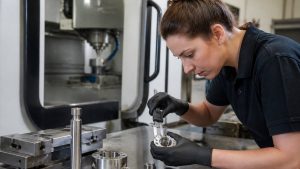
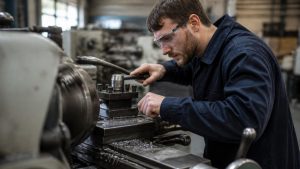
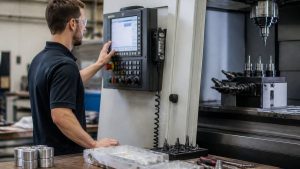
A plant may not just need a machine operator. It may need someone who can run multi-axis CNC equipment, hold close tolerances, read blueprints, inspect parts, and troubleshoot issues without constant supervision. A maintenance opening may require electrical knowledge, PLC exposure, hydraulic and pneumatic troubleshooting, and the judgment to work safely under pressure. Those are not interchangeable skill sets.
That is one reason Akron manufacturing jobs remain competitive. The volume of openings matters, but the real issue is alignment between job requirements and candidate capability. When employers hire too broadly or candidates apply too broadly, both sides lose time.
The hiring challenge behind Akron manufacturing jobs
Manufacturing leaders usually know what they need. The challenge is getting qualified people in front of them before production schedules, overtime costs, or turnover create a bigger problem.
Employers are competing on more than wages
Compensation matters, and candidates know the market. But pay is only one piece of the equation. Shift structure, benefits, overtime expectations, advancement opportunities, plant culture, equipment condition, and leadership quality all affect whether a candidate says yes or stays long term.
A company offering solid wages can still struggle if the interview process drags on for two weeks, communication is inconsistent, or the role was described poorly from the start. In manufacturing, the best candidates often have options. If the process feels disorganized, they move on.
Candidates want clarity, not vague promises
Job seekers in manufacturing tend to respond well to straight answers. They want to know what the shift is, what the equipment is, what the expectations are, what the pay range is, and whether the company has a reputation for stability.
That may sound simple, but many hiring problems begin with avoidable ambiguity. A job posted as a machining role may really be part setup, part operation, and part inspection. A maintenance job may sound mechanical until the interview reveals a heavy electrical focus. When that mismatch happens, the employer gets weaker applicants and the candidate wastes time.
What good manufacturing candidates in Akron are looking for
Not every candidate wants the same thing, and that is where hiring gets nuanced. One person may be focused on wage growth. Another may prioritize first shift. Another may want a cleaner plant, better leadership, or a move from job shop work into a more stable production environment.
The strongest candidates usually look at the full picture. They want competitive compensation, but they also pay attention to turnover, training, management consistency, safety practices, and whether the company invests in its people. In a tight labor market, employers who ignore those factors tend to feel it in retention.
For engineering and technical professionals, the standards can be even more specific. A manufacturing engineer may be evaluating the company’s process maturity, capital investment plans, and openness to continuous improvement. A quality professional may want to understand whether they are walking into a structured system or constant firefighting. Those details shape whether a role feels like an opportunity or a risk.
Akron manufacturing jobs require sharper screening
For employers, the biggest mistake is assuming urgency justifies a lower hiring standard. It usually does the opposite. A rushed hire who cannot handle the technical demands of the role creates downtime, scrap, safety risk, training burden, and another opening a few weeks later.
Skill fit has to come before resume volume
A large stack of resumes can create the illusion of progress. But if most applicants do not have the right background, the process is still slow. In technical manufacturing hiring, accuracy matters more than volume.
That means screening for practical details. Has the candidate worked with similar tolerances, machinery, materials, quality systems, maintenance demands, or production environments? Can they explain what they actually did, not just what their title was? Do they understand the pace and discipline the role requires?
Strong screening also helps candidates. A skilled machinist should not be pushed toward a role that is mostly repetitive operation with little setup responsibility if that is not what they want. A production supervisor should not walk into an interview only to find out the company expects full maintenance oversight and scheduling ownership beyond the posted scope. Honest alignment benefits everyone.
What employers can do right now
If hiring has been slow or inconsistent, the fix is not always increasing job ads or widening the search without a plan. Often, the better move is tightening the process.
Start with the role itself. Make sure the job description reflects the actual work, not an outdated template. Separate must-have skills from preferred experience. Be realistic about what can be trained and what cannot. A company that treats every wish-list item as mandatory may eliminate good people unnecessarily.
Then look at speed. In-demand manufacturing candidates should not wait a week for feedback after a strong interview. If internal approvals are slow, that delay becomes a competitive disadvantage. The market will not pause while a team debates next steps.
Finally, evaluate the candidate experience. Communication does not need to be elaborate, but it does need to be consistent and respectful. Skilled professionals notice when they are treated like a number. They also notice when an employer is prepared, direct, and serious about the opportunity.
What job seekers should know about Akron manufacturing jobs
Candidates can improve their results by being just as specific as employers need to be. A resume that says “machine operator” or “maintenance tech” is often too broad to stand out. If you have setup experience, blueprint reading ability, electrical troubleshooting skills, welding certifications, PLC exposure, quality documentation experience, or leadership background, say so clearly.
It also helps to be honest about what you want next. If you are trying to move off third shift, into a cleaner facility, toward better advancement, or into a more technical role, that is useful information. A stronger match starts with a clearer target.
Candidates should also ask better questions. What does success look like in the first 90 days? Why is the role open? What is the turnover like on the team? How much preventive maintenance versus emergency work is involved? Is the company growing, replacing, or stabilizing? Those answers reveal more than a polished job posting ever will.
Why specialized recruiting helps in manufacturing
General hiring support can fill some roles. But technical manufacturing hiring is different. Titles alone do not tell the full story, and small differences in skill level can have a major impact on performance.
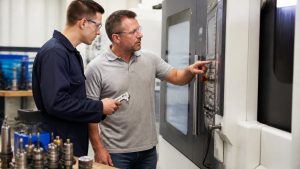
That is where a specialized recruiting partner can make the process more efficient. When a recruiter understands the difference between a CNC operator and a setup machinist, between an industrial electrician and a general maintenance technician, or between a quality inspector and a quality engineer, the screening process improves immediately.
For employers, that means less wasted interview time and better candidate quality. For job seekers, it means access to roles that are better matched to their actual experience and goals. That kind of market knowledge is one reason firms like IntegrityJobs.com continue to be valuable in Ohio’s industrial hiring landscape.
The real opportunity in Akron manufacturing jobs
There is still strong opportunity in Akron manufacturing, but the market rewards precision. Employers need to define roles clearly, move decisively, and compete on more than urgency. Candidates need to present their experience accurately and target jobs that fit both their skills and long-term goals.
When both sides get that right, hiring becomes less about filling a seat and more about building stability. In manufacturing, that difference shows up on the floor, in retention numbers, and in the quality of work getting done every day.
If you are hiring or job searching in Akron, the best next step is usually the simplest one: get clear about the fit before the process starts. It saves time, lowers risk, and leads to better decisions on both sides.