

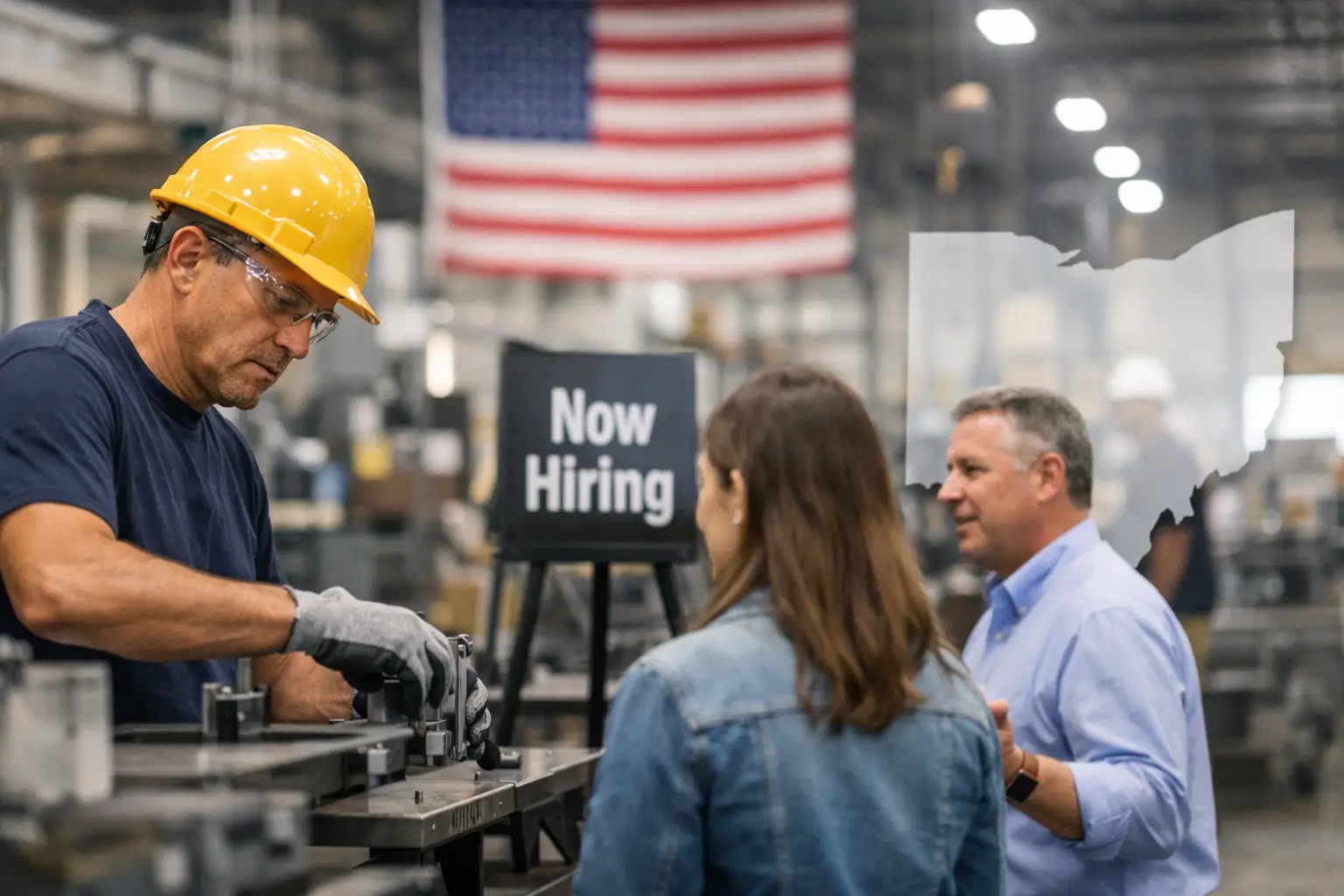
A production supervisor can have approved headcount, competitive equipment, steady orders, and a real need to hire – yet still spend months looking for one qualified maintenance technician or CNC machinist. That is why is manufacturing hiring so hard for so many Ohio employers: the problem is not simply a lack of applicants. It is a mismatch between the work available, the skills required, and the way many hiring processes reach candidates.
Manufacturing remains a strong source of careers across Ohio, from Akron and Canton to Cleveland, Columbus, Dayton, and Toledo. But hiring has become more difficult because technical experience is scarce, expectations have changed, and strong candidates often have more than one option. Employers that understand the full picture can make better decisions before a critical role sits open long enough to affect production.
Why Is Manufacturing Hiring So Hard? The Short Answer
Manufacturing hiring is difficult because demand for experienced people exceeds the available supply in many roles. Employers are not only looking for workers. They are looking for people who can safely operate complex equipment, read prints, troubleshoot problems, maintain quality standards, work reliable shifts, and contribute from the start.
That combination is hard to find. A candidate may have years of shop-floor experience but lack the specific controls, certifications, programming knowledge, or industry background a role requires. Another may have the technical ability but be unwilling to accept the schedule, commute, compensation, or work environment. When an employer treats those gaps as minor details, the search can stall quickly.
The challenge is especially clear in skilled trades and technical positions such as industrial maintenance, machining, welding, quality, controls, engineering, production supervision, and supply chain leadership. These are not roles that can always be filled through a broad job posting and a quick interview.
The Skilled Talent Pipeline Has Narrowed
For decades, many experienced manufacturing professionals entered the field through vocational programs, apprenticeships, family connections, or entry-level plant jobs that provided a path upward. Some of those paths still exist, but the pipeline is not producing enough replacements for the experienced workers leaving the workforce.
Retirements are a major factor. A seasoned maintenance mechanic or tool-and-die maker may carry years of practical knowledge that is not captured in a manual. When that person retires, the employer loses technical skill, process knowledge, and informal leadership at the same time.
At the same time, younger workers have more career choices and may have outdated perceptions of manufacturing. They may picture repetitive, unstable work rather than advanced facilities using automation, robotics, precision machining, digital systems, and modern quality practices. The industry has work to do in showing students, families, and career changers that manufacturing can offer stable, well-paid, technically challenging careers.
Training creates another complication. Employers need people now, while developing a new technician or machinist may take months or years. Building an internal pipeline is the right long-term move, but it does not eliminate immediate hiring pressure when a key shift is short-staffed.
Requirements Often Outrun the Available Market
A job description can be technically accurate and still be unrealistic for the market. For example, an employer may seek a maintenance technician who has electrical and mechanical expertise, PLC troubleshooting ability, welding skills, hydraulics and pneumatics knowledge, a specific industry background, and flexibility for a difficult shift. That ideal candidate exists, but they may already be employed and well compensated.
The same issue affects engineering and quality roles. Requiring a narrow combination of software experience, product knowledge, credentials, and years of direct experience can reduce a viable candidate pool to almost nothing. If the pay range does not reflect that level of specialization, the role becomes even harder to fill.
This does not mean employers should lower standards that protect safety, quality, or performance. It means separating true non-negotiables from preferences. A candidate who understands the equipment, demonstrates sound troubleshooting judgment, and learns quickly may be a better long-term hire than someone who checks every box but lacks motivation or reliability.
Pay Matters, but It Is Not the Whole Offer
Compensation is often the first issue raised in a difficult search, and it matters. Skilled workers know their market value. If nearby employers offer higher pay, better shift differentials, stronger benefits, or more predictable schedules, candidates will notice.
Still, manufacturing candidates evaluate more than an hourly rate or salary. They want to know whether overtime is genuinely optional, whether the shift schedule is sustainable, how supervisors communicate, whether equipment is maintained, and whether the company promotes from within. A worker who has experienced frequent mandatory overtime, poor safety practices, or constant schedule changes may prioritize stability over a modest pay increase.
Employers should be clear early about the full value of the position. Explain the shift, overtime expectations, training available, benefits, advancement opportunities, and the type of work the employee will actually perform. Vague promises create doubt, while straightforward details help the right candidates opt in.
The Hiring Process Can Lose Good People
Strong technical candidates are usually not on the market for long. A slow process gives other employers time to act. It also sends an unintended message that the company is disorganized or uncertain about the role.
Common friction points include delayed feedback after interviews, too many approval steps, requests for repeated paperwork, and interview panels that cannot agree on what they need. Candidates may also disengage when they receive little information about the job, the team, or the next step.
Speed should not mean careless hiring. Background checks, skill evaluations, and thoughtful interviews all have a place. But an employer should know who owns each decision, how quickly feedback is expected, and what conditions must be met before an offer is approved. In a competitive market, a well-run process is part of the employment offer.
Location, Shifts, and Daily Reality Shape the Candidate Pool
Not every hiring challenge is caused by a skills shortage. Geography can narrow the pool, particularly for plants located outside a major population center or for roles that require a long commute. Candidates also weigh fuel costs, traffic, child care needs, and the practicality of rotating or overnight shifts.
A third-shift role may pay well but still draw fewer applicants than a comparable day-shift position. A plant that runs hot, loud, or physically demanding work may need to be more deliberate about how it communicates safety standards, equipment investments, breaks, and workplace culture.
There is no universal fix. Some employers may improve results through a stronger shift premium or adjusted start times. Others may benefit from cross-training current employees, adding transportation support, or widening the geographic search. The right answer depends on the role, local competition, and operational needs.
How Employers Can Improve Manufacturing Hiring Results
The best hiring improvements usually begin before a job is posted. Start with a realistic discussion between operations, HR, and the hiring manager. Define the capabilities needed on day one, the skills that can be trained, the shift requirements, the compensation range, and the reason the role is open. A replacement hire requires a different plan than a newly created role supporting growth.
Then make the job message specific. Skilled candidates do not need generic language about a “fast-paced environment.” They need to know what machinery they will work on, what problems they will solve, how the team is structured, and how success will be measured. Respect their time by being direct about the conditions of employment.
Employers should also keep communication active. A quick response after a resume review or interview does more than move a candidate forward. It demonstrates professionalism. Even when a candidate is not the right match, a respectful response protects the company’s reputation in a close-knit industrial market.
For hard-to-fill positions, specialized recruiting support can shorten the distance between an open role and qualified people. IntegrityJobs.com brings 30 years of experience in engineering, manufacturing, and skilled labor recruiting, with a focus on connecting Ohio employers to candidates whose backgrounds match the work rather than sending unqualified volume. That local, relationship-based approach is particularly valuable when the best candidate is currently employed and needs a credible reason to consider a change.
A Better Question Than “Why Can’t We Find Anyone?”
The more useful question is: “What would make the right person choose us?” The answer may involve pay, but it may also involve a clearer job scope, a faster hiring process, a better shift arrangement, stronger leadership communication, or a training path that gives someone room to grow.
Manufacturing employers do not need to compromise on safety, quality, or dependability to hire successfully. They do need to recognize that qualified people are assessing employers with the same care employers use to assess them. Treat the process as the beginning of a working relationship, and the right candidate is more likely to see a reason to stay.
