

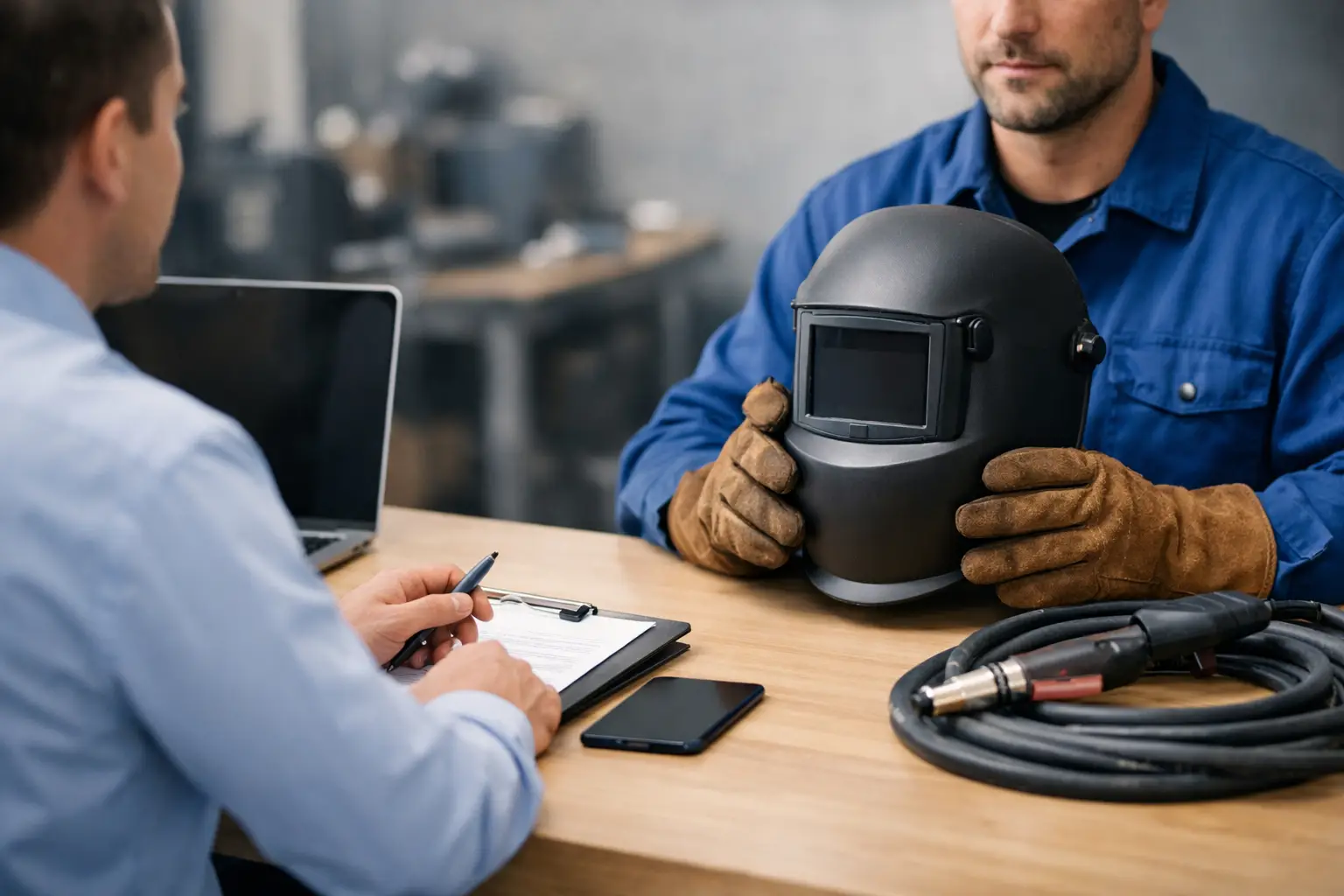
A welder can look qualified on paper and still be the wrong fit for your floor. A current certification does not tell you whether someone can consistently hold tolerances, read your specific prints, work safely through a full shift, or show up for a 5:30 a.m. start. Knowing how to screen welders means separating documented credentials from job-ready capability before a weak hire costs production time, rework, and team confidence.
For Ohio manufacturers, the goal is not to build the longest possible applicant funnel. It is to identify welders whose process experience, work habits, and expectations match the work you actually need done. A disciplined screening process does that faster and more fairly for everyone involved.
Start With the Actual Welding Job
The screening process is only as good as the job definition behind it. “Welder needed” is not enough. Before reviewing candidates, clarify the materials, welding processes, positions, thickness ranges, production pace, inspection requirements, shift, and physical conditions of the role.
A structural MIG welder working heavy carbon steel is not automatically qualified for a precision TIG role on thin stainless or aluminum. Likewise, a candidate with strong fabrication experience may not thrive in a repetitive production environment where cycle time and fixture discipline matter every hour.
Talk with the supervisor or lead welder, not only the person who opened the requisition. Ask what separates the people who succeed from those who wash out in the first 90 days. The answer may be print reading, fit-up ability, overhead work, robotic weld-cell familiarity, attendance, or willingness to rotate shifts. Those details should drive every question that follows.
Screen Welder Resumes for Specific Evidence
A resume is an introduction, not proof of ability. Look beyond broad labels such as “MIG/TIG welder” and seek evidence that connects the candidate to your work.
Relevant indicators include the processes used, base metals handled, material thicknesses, welding positions, code or customer requirements, inspection exposure, and equipment experience. A resume that says “MIG welding” leaves important questions unanswered. A stronger resume identifies whether the person welded mild steel production assemblies, used pulse MIG, worked from blueprints, completed fit-up, and performed visual inspection or repaired rejects.
Employment history also deserves a careful read. Short tenures are not an automatic disqualifier, particularly in contract-heavy industrial markets. Still, repeated brief assignments with no clear explanation warrant a direct conversation. Look for patterns rather than making assumptions. A welder who moved for better pay may be a strong candidate; a welder who routinely left after attendance or quality issues may not be.
Do not screen out capable candidates simply because they do not use the same terminology your company uses. Many experienced tradespeople describe work plainly. Ask follow-up questions before deciding their experience is too limited.
Use a Focused Phone Screen Before the Shop Test
The phone screen should confirm basic fit, verify claims, and protect your team’s time. It should not become a technical trivia contest. Five to seven direct questions can reveal more than a long, generic interview.
Ask the candidate to describe their most recent welding work from start to finish. A qualified welder should be able to explain the material, process, joint type, position, preparation, settings, and quality checks in practical terms. Listen for ownership. Candidates who only say they “ran parts” may have had a narrow role, while those who explain fit-up, gas selection, wire changes, distortion control, and defect correction usually understand the full operation.
Ask what they do when a weld fails visual inspection. Strong answers often include checking the print and weld callout, identifying likely causes such as contamination, poor fit-up, incorrect settings, or travel speed, and correcting the issue without hiding it. This question also reveals whether the candidate treats quality as a shared responsibility.
Confirm availability and expectations early. Discuss shift, overtime, commute, pay range, drug and background requirements where applicable, and the physical demands of the position. A technically capable welder who cannot work the required shift is not a viable match. Being direct at this stage is respectful, and it prevents last-minute surprises.
Questions That Reveal Real Process Knowledge
Use questions tied to the work instead of asking candidates to recite definitions. For example, ask how they would avoid burn-through on thinner material, what they look for before welding a joint, or how they adjust when fit-up is inconsistent.
For TIG work, ask about controlling heat input and preparing aluminum or stainless. For MIG production work, ask how they recognize a wire-feed or shielding-gas problem. For flux-cored welding, ask about slag removal and common causes of porosity. The best answer will depend on the process and environment, but the candidate should show sound reasoning and familiarity with real shop conditions.
Verify Certifications and Work History
Certifications matter, particularly when your customer, code, or quality system requires them. But a certificate is only meaningful when it is current, relevant, and verified. Confirm the process, position, base material, thickness range, code, testing date, and whether the certification was employer-specific.
A candidate may have passed a plate test years ago but not used that process recently. That does not mean they cannot perform the job, but it does mean a practical test is essential. Conversely, an excellent production welder may have limited formal certification history because their previous work did not require it.
Reference checks can help validate reliability, quality mindset, and safety habits. Keep questions job-related: Did the person meet attendance expectations? Could they read prints? Did they work independently? How did they respond to quality feedback? Were they eligible for rehire? A former supervisor’s answer is not the sole deciding factor, but it can confirm or challenge what you heard in the interview.
Make the Welding Test Match the Role
A practical weld test is usually the most valuable part of the process, provided it reflects the job. Testing every candidate on an elaborate code plate when the opening is a straightforward production MIG role can eliminate solid workers for the wrong reason. On the other hand, a quick bead on scrap metal is not enough for a demanding pipe, pressure, aerospace, or precision fabrication position.
Use the same test, instructions, materials, and evaluation criteria for every candidate applying to the same role. This supports a fair process and gives your team a more useful comparison. Include the process, material, thickness, position, joint configuration, and time allowance that resemble daily work.
Evaluate more than the finished bead. Watch preparation, PPE use, equipment setup, body positioning, ability to follow instructions, and how the candidate handles an unexpected issue. A clean-looking weld has value, but an unsafe or careless approach can create bigger problems after hire.
Have a qualified evaluator review the test against clear criteria. Depending on the role, this may include bead profile, penetration, fusion, porosity, undercut, spatter, distortion, dimensional accuracy, and adherence to the print. If nondestructive or destructive testing is required, explain that expectation beforehand.
Assess Reliability and Team Fit Without Guesswork
Welding is skilled work, but a successful hire also has to function within your operation. Ask behavioral questions that focus on the job: Describe a time you found a quality issue before it reached the next station. How do you respond when a lead changes priorities? What do you do if a fixture, drawing, or material does not match the work order?
Listen for accountability, communication, and judgment. The right candidate does not need to have the same personality as the current team. They do need to accept feedback, follow safety procedures, communicate problems early, and respect production standards.
Avoid vague hiring decisions based on whether someone “feels like a fit.” Define the behaviors that matter, then evaluate them consistently. This reduces bias and gives candidates a clearer, more professional experience.
Create a Simple Scorecard for Every Candidate
A scorecard prevents one strong impression from outweighing the rest of the evidence. Rate each qualified candidate against the same core areas: relevant process experience, print reading and fit-up, test results, quality awareness, safety practices, attendance and shift fit, and communication.
Weight the categories according to the job. A high-spec TIG opening may put greater weight on test quality and precision. A high-volume production role may prioritize consistent MIG experience, pace, attendance, and ability to follow standard work. Write down the reason for each rating while the interview is fresh.
This approach is especially useful when several managers are involved. It keeps the decision tied to the work, not to who interviewed best.
When Specialized Recruiting Helps
The strongest welder may already be working and may not respond to a general job posting. Specialized recruiting can shorten the search by identifying candidates with relevant industrial experience, discussing the role honestly, and presenting only people who meet the essential requirements.
IntegrityJobs.com helps Ohio manufacturers screen technical and skilled-trades talent with the local market knowledge and recruiting discipline these roles require. A qualified shortlist should save your hiring team time, not create another stack of resumes to sort.
The best screening process gives good welders a fair chance to demonstrate what they can do while protecting your operation from avoidable hiring mistakes. Define the work clearly, test the skills that matter, verify the details, and communicate candidly from the first conversation. That is how you build a welding team people can rely on when the schedule is tight and quality cannot slip.
