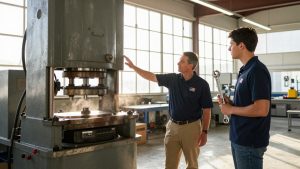


A production supervisor opening sat vacant for 74 days. Two maintenance technician offers had been declined. Overtime was climbing, preventive maintenance was slipping, and the plant manager was spending too much time reviewing resumes that never should have reached the interview stage. This manufacturing hiring turnaround case study examines how a representative Ohio manufacturer changed course by treating hiring as an operations issue, not an HR backlog.
The company was not short on applicants. It was short on qualified, interested, and available applicants. That distinction mattered. A steady flow of resumes had created the appearance of activity while leaving the real work unfinished: identifying people with the right technical background, work history, shift flexibility, and reasons to make a move.
The Hiring Problem Was Bigger Than Open Requisitions
The manufacturer operated a multi-shift facility with a mix of CNC equipment, automated production lines, and conventional industrial maintenance needs. Its open roles included maintenance technicians, CNC machinists, quality technicians, production supervisors, and a manufacturing engineer.
Leadership initially described the problem as a labor shortage. There was truth in that. Skilled trades and technical candidates remain difficult to find, especially when employers need specific experience with controls, hydraulics, PLC troubleshooting, machining tolerances, or regulated quality systems. But the hiring process was adding friction of its own.
Job descriptions were broad, compensation ranges were not consistently discussed early, and interview scheduling could take more than a week after an initial screen. Candidates who were actively employed often accepted other offers before the plant made a decision. Meanwhile, managers were frustrated by candidates who looked qualified on paper but lacked the hands-on experience needed for the floor.
The cost showed up quickly. Open positions increased overtime, limited production flexibility, and placed more pressure on reliable employees. Those employees were then more likely to burn out or consider leaving. Hiring delays were no longer confined to the recruiting function. They were affecting throughput, maintenance reliability, and morale.
Manufacturing Hiring Turnaround Case Study: The Reset
The first step was not posting more ads. It was narrowing the definition of a qualified hire.
Plant leadership, HR, and department managers met to separate true requirements from preferences. For each role, they identified the equipment, certifications, shift expectations, physical demands, wage range, and first-90-day outcomes that actually mattered. A maintenance technician, for example, did not need experience with every machine in the facility. The non-negotiables were electrical troubleshooting, mechanical aptitude, safe work habits, and the ability to work independently on a rotating shift.
That clarification changed the candidate pool. Rather than rejecting candidates for missing a preferred brand of equipment or an exact industry match, the team began assessing adjacent experience. A technician from food processing might be a strong fit for a plastics manufacturer if the core troubleshooting skills transferred. A machinist with strong setup experience could be trained on a different control system more easily than an entry-level operator could become a dependable setup machinist.
This was not a move toward lower standards. It was a move toward accurate standards.
Faster Decisions Without Cutting Corners
The manufacturer also rebuilt its interview process around response time. The previous process included an HR screen, a manager interview, a plant tour, and a final approval that could stretch over several weeks. The new process kept the necessary evaluation but set clear ownership and deadlines.
Qualified candidates received an initial response quickly. Hiring managers committed to interview windows twice per week. Feedback was due within one business day, and final decisions were made within 48 hours of the last interview whenever possible. If a candidate was not a match, the team closed the loop promptly instead of letting communication fade.
Speed matters in technical hiring, but it only works when the assessment is focused. The plant replaced vague interview questions with practical conversations about equipment, safety decisions, troubleshooting methods, attendance history, and the candidate’s reason for considering a change. For some positions, a brief skills evaluation or supervised floor walkthrough offered more useful information than another round of generic interviews.
There was a trade-off. Faster decisions required managers to protect time on their calendars and avoid waiting for a perfect candidate who might never appear. In return, the company reduced the chance of losing solid candidates to employers willing to act.
Compensation Became Part of the First Conversation
One of the most expensive sources of wasted recruiting time was late-stage compensation misalignment. Candidates would complete interviews only to learn that the wage range, shift differential, or benefits package did not meet their needs.
The turnaround process brought pay transparency forward. Recruiters and hiring managers discussed the realistic compensation range early, along with overtime expectations, shift schedules, bonus structures, and benefits timing. This did not mean every candidate had to accept the first number presented. It meant both sides could decide whether continued conversations were worthwhile.
For hard-to-fill roles, the manufacturer reviewed whether its pay structure reflected the local market. In a few cases, the answer was no. Raising a starting rate or adding a meaningful shift differential was less costly than months of vacancy, repeated agency spend, and excessive overtime. In other cases, the company could not lead the market on base pay, so it emphasized schedule stability, advancement opportunities, cleaner working conditions, and a better-managed operation. The right approach depended on the role and the employer’s actual strengths.
What Changed in the Candidate Experience
Candidates do not expect a perfect process. They do expect honesty and basic respect for their time.
The manufacturer began giving candidates a clearer picture of the job before interviews: the shift, department, physical environment, reporting structure, equipment, and reasons the role was open. This helped reduce early turnover because new hires arrived with realistic expectations. It also made the company more credible with candidates who had heard vague promises from other employers.
Communication improved after interviews as well. Candidates received updates even when there was no final decision yet. For skilled workers who are often contacted by multiple employers, that simple practice helped the company stand out. It also protected its reputation in a close-knit regional labor market where word travels quickly.
The company made another useful change: it stopped treating every candidate relationship as a one-time transaction. A strong applicant who was not right for a day-shift machinist opening might be an excellent fit for a future setup role, maintenance opening, or supervisory position. Maintaining accurate notes and following up respectfully created a usable talent bench instead of a pile of expired resumes.
Results That Operations Could Feel
Within the next hiring cycle, the manufacturer saw shorter time-to-interview and fewer late-stage candidate withdrawals. The most meaningful improvement was not simply a lower time-to-fill number. It was better manager confidence in the people reaching the interview stage.
Managers spent less time meeting candidates who lacked the required hands-on experience. Candidates had fewer surprises about pay, schedule, or working conditions. New hires entered roles with a more realistic understanding of the job, which supported retention during the critical first months.
The company still faced competition for experienced technicians and engineers. No recruiting process eliminates that reality. But it stopped creating avoidable losses through slow communication, vague requirements, and inconsistent decision-making.
Lessons for Ohio Manufacturing Employers
A hiring turnaround begins with an honest diagnosis. If qualified candidates are not applying, examine compensation, schedule, location, reputation, and job requirements. If candidates are applying but not accepting, look closely at response time, interview experience, and offer competitiveness. If new hires are leaving early, compare what was promised during recruiting with the work they actually encountered.
Specialized recruiting support can help when internal teams lack the time or market reach to run that analysis while keeping production moving. A recruiting partner should understand the difference between a title match and a skills match, particularly for engineering, manufacturing, and skilled labor roles. It should also communicate candidly when an employer’s expectations do not align with the available market.
IntegrityJobs.com works with Ohio employers that need this kind of focused, relationship-based hiring support. The goal is not to send more resumes. It is to create better conversations with people who can do the work and see a reason to stay.
The next open role is an opportunity to test the process. Set a realistic profile, respond with urgency, tell candidates the truth about the job, and make a clear decision when the right person is in front of you.