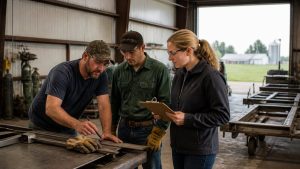


Controls engineer jobs Columbus manufacturers need to fill are rarely entry-level openings with a simple checklist. A plant may need someone who can troubleshoot a line at 2 a.m., modernize an aging controls system, support a new capital project, and explain a technical problem clearly to maintenance, production, and management. That combination is why strong candidates remain in demand – and why employers need to look beyond a keyword-heavy resume.
Columbus and the surrounding Central Ohio market continue to offer meaningful opportunities in advanced manufacturing, food and beverage, automotive supply, logistics, pharmaceuticals, consumer products, and process industries. The titles vary: controls engineer, automation engineer, PLC programmer, electrical controls engineer, or systems integration engineer. The core work is often similar, but the details of the environment matter a great deal.
What Controls Engineer Jobs in Columbus Actually Require
A controls engineer is responsible for the systems that make industrial equipment run safely, consistently, and efficiently. In practical terms, that can include designing electrical control panels, programming PLCs and HMIs, commissioning machinery, diagnosing downtime, integrating robots or drives, and documenting changes so the next person can support the equipment.
The work sits at the intersection of electrical engineering, software logic, mechanical equipment, and plant operations. A candidate who has programmed an Allen-Bradley ControlLogix system in a high-speed packaging plant may be highly qualified for one opening and less suited to a process-control role built around Siemens platforms, distributed control systems, or regulated validation requirements. Neither background is inherently better. The right fit depends on the equipment, production environment, and business need.
The technical foundation employers look for
Most employers expect hands-on familiarity with PLC programming, HMI development, industrial networks, control panels, sensors, motors, VFDs, and electrical schematics. Rockwell Automation experience remains widely requested in Ohio manufacturing, particularly Studio 5000, FactoryTalk View, PanelView, and common Ethernet/IP architectures. Siemens, Omron, Mitsubishi, Beckhoff, ABB, Schneider Electric, and Ignition experience can be equally valuable when they match the site’s installed base.
Still, software names alone do not tell the full story. Hiring managers want to know whether a candidate can read a machine sequence, isolate a fault, work safely around energized equipment, and identify the root cause rather than repeatedly resetting an alarm. They also want evidence of judgment: when to make a temporary production-saving adjustment, when to stop and investigate, and when a change needs formal engineering review.
Project experience carries weight as well. Candidates who have participated in a startup, line expansion, robot cell integration, control panel upgrade, or migration from legacy PLC hardware can bring immediate value. The strongest examples explain the scope of the work, the technical decisions made, the downtime avoided, and the result for the operation.
The less visible skills that affect hiring decisions
Controls work is collaborative work. Engineers spend time with electricians, maintenance technicians, OEM technicians, production supervisors, quality teams, IT personnel, and outside integrators. An engineer who can solve a difficult controls problem but cannot communicate the plan may create delays and frustration on the plant floor.
Clear documentation is another separator. Updated electrical drawings, organized program backups, meaningful tag names, alarm notes, and change records make a system easier to support long after commissioning ends. Employers recognize that good documentation reduces risk, shortens troubleshooting time, and protects production knowledge when employees retire or move on.
Travel and schedule expectations should be discussed early. Some controls engineer jobs are plant-based roles with occasional off-hours support. Others involve frequent travel to customer sites, extended commissioning periods, or rotating on-call coverage. A role can offer excellent technical growth but still be a poor match if the travel requirement conflicts with the candidate’s life or the employer’s actual staffing needs.
How Candidates Can Stand Out in a Competitive Search
A resume for a controls role should make the environment visible. Listing “PLC programming” is not enough. Identify the platforms used, the industries served, the kinds of equipment supported, and the level of ownership. For example, there is a meaningful difference between assisting with a PLC change and leading a multi-line controls upgrade from design through startup.
Candidates should also quantify impact where possible. Mention a reduction in downtime, a completed line installation, a successful startup, a safety improvement, or a legacy hardware conversion. Exact numbers help, but clear operational outcomes are useful even when confidential information limits detail. “Reduced recurring conveyor faults by redesigning sensor logic and documenting maintenance checks” gives an employer far more insight than “responsible for troubleshooting.”
Be precise about your programming experience
Controls engineers often have broad exposure but deeper expertise in one or two platforms. Being honest about that distinction builds trust. A candidate may have worked around Siemens equipment without independently developing code in TIA Portal. Another may be highly capable with Rockwell PLCs but have limited experience with servo motion or robotics. Accurate positioning leads to stronger interviews and fewer surprises after hire.
It is also wise to separate design, programming, troubleshooting, and commissioning experience. Some roles demand all four. Others are focused primarily on sustaining engineering inside an established plant, while systems integrator positions may lean heavily on design, customer communication, and field startup. A candidate does not need to be everything to every employer. They need to be clear about the work they do well and the direction they want to grow.
Ask better questions in the interview
The best controls candidates evaluate the opportunity with the same care an employer uses to evaluate them. Ask about the current controls architecture, the age of major equipment, the reason the role is open, project backlog, travel expectations, maintenance support, and how after-hours calls are handled.
Questions about engineering standards are especially useful. Does the company maintain electrical drawing standards and code repositories? Are programs backed up and revisions controlled? Is there time and budget for preventive improvements, or is the engineer expected to work only in reactive mode? These answers reveal whether the job supports thoughtful engineering or simply asks one person to carry too much operational risk.
Hiring for Controls Engineer Jobs in Columbus
Employers often lose qualified controls candidates by defining the position too broadly. A posting that asks for every PLC brand, robot type, software language, industry background, and travel availability may discourage people who are capable of succeeding with a reasonable learning curve. The question is not whether a candidate has touched every system in the plant. It is whether they have the right technical base, troubleshooting discipline, and adaptability for the role.
A stronger hiring process separates true requirements from preferences. If the facility runs Rockwell PLCs and must complete an upgrade within six months, direct Rockwell experience may be essential. If the team needs a long-term engineer who can learn a platform with support from senior staff, the screening criteria can be wider. That distinction expands the talent pool without lowering standards.
Make the job scope credible
Technical professionals pay close attention to whether the role description matches the reality of the work. Be direct about travel, shift support, commissioning schedules, compensation structure, and the balance between new projects and daily plant support. An engineer who accepts a job expecting design work but finds constant emergency troubleshooting is unlikely to stay, even if the initial offer was competitive.
Speed matters, but accuracy matters more. Delayed feedback, multiple rounds without purpose, and unclear decision-making can cost an employer a strong candidate. At the same time, rushing past technical evaluation can produce an expensive mismatch. A focused process usually works best: define the must-haves, review relevant project experience, confirm schedule and travel alignment, and move quickly once the fit is clear.
For employers and candidates who want a more informed process, IntegrityJobs.com brings specialized Ohio engineering and technical recruiting experience to the search. The goal is not to send a stack of loosely qualified resumes. It is to understand the equipment, work environment, and career priorities well enough to make a credible match.
A Career Built on Practical Problem-Solving
Controls engineering can lead in several directions. Some professionals become senior automation specialists, project engineers, electrical engineering managers, or plant engineering leaders. Others build careers in systems integration, OEM machinery, robotics, industrial software, or technical sales. The common thread is practical problem-solving: taking complex equipment and making it safer, more reliable, and easier to operate.
For job seekers, the next opportunity should offer more than a familiar title. Look for a role where the technical challenges, support structure, schedule, and growth path fit the career you want to build. For employers, a clear and honest picture of the job is one of the strongest recruiting tools available.