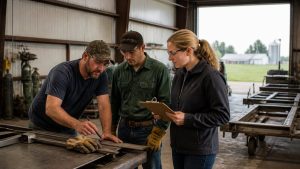


A production line does not wait patiently for an open controls engineer, maintenance supervisor, or CNC programmer to appear. Neither does a project deadline, a quality issue, or an expansion plan. For Ohio industrial employers, an employer guide to technical recruiting has to begin with that reality: hiring technical talent is a business-critical process, not an administrative task to handle when time permits.
The strongest hiring results come from clarity, speed, and honest evaluation. Employers that define the work accurately, communicate decisively, and assess candidates against real job requirements will make better hires than those relying on generic job descriptions and slow approval processes.
Why Technical Recruiting Requires a Different Approach
Technical recruiting is not simply posting a job and selecting the candidate with the right title. Engineering, manufacturing, and skilled trades professionals often have specialized experience that does not fit neatly into a standard resume screen. A manufacturing engineer may have process improvement experience but no exposure to your equipment. An electrician may hold the right credentials yet lack the troubleshooting background needed in a high-volume plant.
The difference matters. Hiring a technically capable person who is mismatched for the actual work can lead to extended training time, turnover, safety concerns, and missed production goals. On the other hand, demanding an exact match for every requirement can eliminate capable candidates who could contribute quickly with reasonable onboarding.
The goal is not to find a perfect resume. It is to identify the candidate whose experience, problem-solving ability, work habits, and career goals fit the role your operation needs to fill.
Start With the Work, Not the Job Title
Titles vary widely across industrial employers. One company’s process technician may be another company’s manufacturing technician. A maintenance mechanic may perform basic repair work at one facility and advanced PLC diagnostics at another.
Before recruiting begins, hiring managers should document what the person will actually do during a typical shift or week. Identify the machinery, software, systems, materials, certifications, safety requirements, and production environment involved. Clarify whether the role is hands-on, supervisory, customer-facing, travel-based, or tied to a specific schedule.
This conversation should also separate true requirements from preferences. A required credential, license, or technical capability belongs at the top of the search criteria. Familiarity with a particular ERP system or prior experience in the same industry may be preferred, but it should not automatically disqualify a candidate with transferable skills.
Build a Hiring Profile That Attracts the Right People
A useful hiring profile gives candidates enough detail to decide whether the opportunity is worth pursuing. It also gives HR, operations leadership, and recruiting partners one shared definition of a qualified applicant.
Describe the purpose of the role in practical terms. Instead of saying an engineer will “support operations,” explain whether they will improve cycle times, launch equipment, troubleshoot recurring defects, manage capital projects, or lead a team. Candidates with strong technical backgrounds want to know what they will own and how success will be measured.
Pay attention to the factors that affect acceptance decisions. Compensation matters, but it is rarely the only issue. Shift schedule, overtime expectations, plant conditions, travel, leadership style, equipment quality, training, advancement potential, and job stability all influence whether a candidate will seriously consider an offer.
Employers do not need to oversell a demanding position. In fact, a straightforward description builds more trust. If a role requires off-shift coverage, frequent troubleshooting, or work in a hot production area, say so early. The right candidate will respect the honesty, and the wrong candidate is less likely to accept and leave quickly.
Make the Recruiting Process Fast Enough to Compete
The best technical candidates are often employed, and they are rarely available for long. A slow process signals uncertainty and gives competing employers time to make a clearer, faster offer.
Speed does not mean skipping evaluation. It means deciding in advance who can approve compensation, who will interview, what questions need to be answered, and how quickly feedback will be shared. For many technical roles, a concise process with an initial conversation, a focused manager interview, and a final site meeting is more effective than a string of interviews that repeat the same ground.
Set expectations internally before candidates enter the process. If the plant manager needs to meet every finalist, reserve time on the calendar. If compensation approval requires finance involvement, establish the range beforehand. If a skills assessment is necessary, make it relevant to the job and respectful of the candidate’s time.
A candidate should not wait a week to learn whether an interview went well. Prompt feedback also helps recruiters address concerns while the conversation is still active. Delays are sometimes unavoidable, but silence should not be part of the process.
Interview for Evidence, Not Assumptions
Technical interviews work best when questions are tied to real challenges in the role. Ask a maintenance candidate to describe how they diagnosed an intermittent equipment failure. Ask a quality engineer how they handled a recurring defect that affected production. Ask a production supervisor how they addressed attendance, safety, and throughput at the same time.
Listen for the method behind the answer. Strong candidates can usually explain how they assessed a problem, involved others, made a decision, and measured the result. They should be able to discuss setbacks honestly as well. Technical knowledge is essential, but accountability, communication, and sound judgment often determine whether that knowledge produces results on the floor.
Be careful with overly narrow interview standards. A candidate may not know your exact machine brand or internal system, yet still have a demonstrated record of learning comparable equipment quickly. Conversely, familiarity with your industry does not guarantee the person can lead, troubleshoot, or adapt under pressure. The right balance depends on how much training the role allows and how immediate the business need is.
Use Compensation and Communication as Competitive Advantages
Technical professionals know their market value, especially in hard-to-fill specialties. Employers do not always need to offer the highest wage or salary, but they do need to make a fair, credible offer that matches the responsibility of the work.
A vague compensation conversation wastes time for everyone. Establish a realistic range based on the skills required, local market conditions, shift differentials, overtime, benefits, and advancement opportunity. If the budget cannot support the experience level requested, revise the role rather than expecting a senior candidate to accept an entry-level offer.
Communication is equally important. Candidates notice whether interviewers are prepared, whether they receive clear answers, and whether commitments are kept. A respectful process reflects the culture they can expect after hire. For employers, it also protects the company’s reputation in a close-knit technical labor market.
When a Specialized Recruiting Partner Adds Value
Internal teams often handle hiring effectively for predictable, high-volume needs. But a specialized recruiting partner can be particularly valuable when a role is confidential, highly technical, urgent, or difficult to source through standard channels.
The right partner should understand the difference between a keyword match and a true technical fit. They should ask direct questions about your operation, present candidates with relevant context, and be candid when the requirements, compensation, or timeline do not align with the available market.
IntegrityJobs.com brings 30 years of recruiting experience to engineering, manufacturing, and skilled labor hiring across Ohio. For employers in markets such as Akron, Canton, Cleveland, Columbus, and beyond, local knowledge can shorten the path to candidates who understand the realities of industrial work.
A recruiting relationship should not create more resumes for your team to review. It should create better conversations with people who have been evaluated against the work, the workplace, and the opportunity.
Measure the Hire After the Offer Is Accepted
An accepted offer is not the finish line. Review hiring outcomes at 30, 90, and 180 days. Did the employee reach expected productivity? Did the manager receive the technical capability promised? Was the job description accurate? Did any part of the interview process fail to identify a training need or culture concern?
These reviews make future recruiting more precise. They also reveal patterns that may have little to do with recruiting, such as inconsistent onboarding, unclear supervision, outdated compensation, or unrealistic workload expectations.
Technical talent wants meaningful work, fair treatment, and a workplace where their expertise is respected. Employers that offer those conditions – and communicate them clearly from the first conversation – will build a stronger pipeline than companies that treat recruiting as a last-minute transaction.