
Last Updated: October 25, 2026
Quick Summary
Hiring skilled trades in rural in Ohio succeeds through relationships built before a vacancy opens, not job-board postings. Pick two channels, such as a career-technical advisory board and a referral bonus paid in two installments, and work them for a year. Move in days, let the foreman interview, and benchmark pay against your county and commuting radius.
- Rural hiring fails when job descriptions ask for everything and attract nothing, so build a skills matrix first.
- Keep the hiring process to two steps: application, then a single on-site visit.
- Pay referral bonuses in two installments, one at hire and one at 90 or 180 days.
- Set the pay floor at the county median and the midpoint at the 75th percentile.
- Review pay ranges at least once a year and whenever a major nearby employer changes pay.
Table of Contents
- Why Rural Ohio Hiring for Skilled Trades Is Different
- Step 1: Define the Roles and Skills You Actually Need
- Step 2: Skilled Trades Hiring Strategies That Fit Small Employers
- Step 3: Recruit Through Rural-Specific Channels
- Step 4: Apprenticeship Recruitment for Employers Who Need Long-Term Hires
- Step 5: Benchmark Pay and Benefits for Rural Counties
- Step 6: Retain Skilled Workers Once They Are On Board
- When to Bring In Skilled Trades Staffing in Ohio
- Frequently Asked Questions
Why Rural Ohio Hiring for Skilled Trades Is Different
Hiring skilled trades in rural in Ohio is harder than hiring in Columbus or Cleveland, and not for the reason most plant managers assume. The problem is not a lack of skilled workers. It is distance, thin candidate pools, and competition from larger employers who can pay more and recruit faster.
At IntegrityJobs, we have spent 30 years placing technical talent across all 88 Ohio counties, and the rural pattern holds: a machinist who lives 45 minutes away will often take a slightly lower wage to avoid the commute. That changes how you recruit. You are not just selling a job. You are selling a shorter drive, steadier hours, and a shop where their work matters.
Rural Ohio skilled trades jobs are also shifting. Ohio Department of Job and Family Services labor market data tracks demand by county, and the trend is clear: manufacturers outside the metros report openings that stay unfilled for months. Here is how to close that gap.
Step 1: Define the Roles and Skills You Actually Need
Most rural hiring fails at the first step. The job description asks for everything and attracts nothing.
Start by separating must-have skills from nice-to-have ones. A maintenance technician who can troubleshoot hydraulics and read a ladder diagram is a hire. One who also needs five years of robotics experience may be a unicorn in your county.
Build a skills matrix before you post. List the role, the core tasks, the certifications required, and the training you can provide on the job. That single document tells you which candidates to chase and which to pass on.
Then write interview questions that test safety, reliability, and hands-on skill, not just resume keywords.
Building a Skilled Trades Job Description Template That Works
A skilled trades job description template is a reusable format that lists the role, core duties, required credentials, physical demands, pay range, and shift schedule in plain language.
Keep it short and specific:
- Title and shift in the first line
- Four to six core duties, not fifteen
- Required credentials spelled out, like a CDL class or electrical license
- Pay range and benefits stated openly
- What you will train versus what you expect on day one
Vague postings get vague applicants. A clear template filters for fit before the first call.
Step 2: Skilled Trades Hiring Strategies That Fit Small Employers
Small shops cannot outspend big plants, so they should not try. The skilled trades hiring strategies that work for hiring skilled trades in rural in Ohio are faster and more personal than a big-company process.
Here is what we see work:
- Move in days, not weeks. A good candidate has three offers by Friday.
- Let the foreman interview. Skilled workers trust peers more than HR scripts.
- Offer a paid working interview. Two hours on the floor tells you more than any resume.
- Keep the process to two steps. Application, then a single on-site visit.
Step 3: Recruit Through Rural-Specific Channels
Job boards alone will not fill rural roles. The candidates you want are often not actively searching, and the ones who are get buried under metro postings.
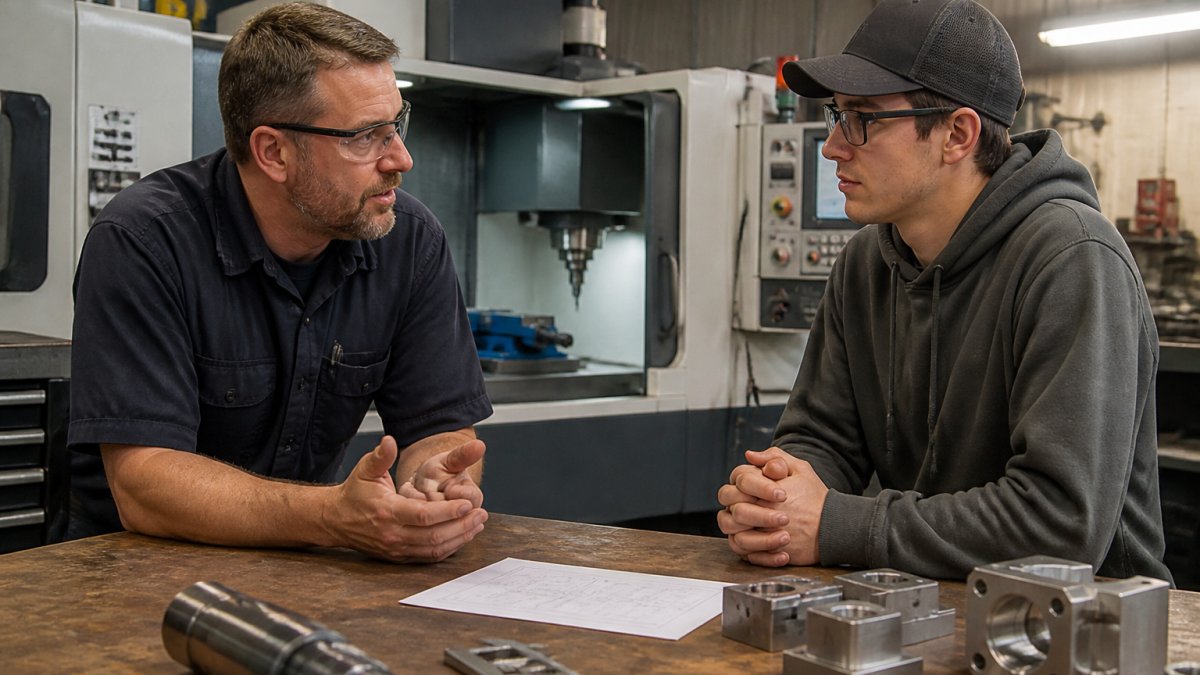
Here is how each rural channel actually works, what it costs you in time, and where it falls short.
OhioMeansJobs centers and local workforce boards. OhioMeansJobs centers, run through local workforce development boards, post openings, host hiring events, and connect employers to state-funded training.
Registered apprenticeships and pre-apprenticeship programs. Ohio Apprenticeship Council-registered programs, often run through unions or employer consortia, give you a structured pipeline and a credential candidates value.
Referral bonuses with a stay requirement. The best rural channel is a current employee who likes the job.
Veterans and transitioning service members. Many have mechanical, electrical, and driving skills that transfer directly, and Ohio has veteran employment resources through the state and local veteran service organizations.
Pick two channels and work them for a year. A single advisory-board relationship and a referral program with a stay requirement will outproduce five one-time job fairs.
The pattern across every channel: rural recruiting is relationship work done before the vacancy. Employers who call the instructor, sit on the board, and pay referrals on retention fill roles in weeks; employers who post and wait fill them in months. Building these local connections ensures that when the time comes to post a job, the community already trusts your reputation enough to respond.
Each rural recruiting channel has its own strengths and trade-offs worth weighing before you commit.
| Channel | How it works | Trade-off |
|---|---|---|
| Career-technical and community college programs | Join advisory boards; get first look at graduates | Boards meet a few times a year; start early |
| OhioMeansJobs centers and workforce boards | Post openings, host hiring events, screen candidates | Paperwork and eligibility rules; flow skews entry-level |
| Registered apprenticeships and pre-apprenticeship programs | Structured pipeline and a credential candidates value | Registration takes time and recordkeeping |
| Referral bonuses with a stay requirement | Pay bonus in two installments, one at 90 or 180 days | Rewards hires who stay, not just show up |
| Veterans and transitioning service members | Mechanical, electrical, and driving skills transfer directly | Military job titles do not map cleanly to trade titles |
| Community channels in small towns | Feed store boards, church and grange networks, county fair job fairs, local radio | Low-cost and high-trust, but slow |
Step 4: Apprenticeship Recruitment for Employers Who Need Long-Term Hires
Apprenticeship recruitment for employers is the practice of building a pipeline from entry-level workers and trainees into skilled roles over months or years, rather than hiring only fully trained workers.
For rural employers, it solves two problems at once. You grow your own talent, and you keep workers who feel invested in.
Set it up like this:
- Partner with a local community college or trade program.
- Define a clear path from helper to technician with milestones.
- Pair each apprentice with an experienced mentor.
- Raise pay at each milestone so progress is visible.
- Track completion and retention, not just starts.
Apprenticeships take patience, but they create workers who stay. That beats a revolving door of outside hires.
Step 5: Benchmark Pay and Benefits for Rural Counties
Use the right data sources. The U.S. Bureau of Labor Statistics Occupational Employment and Wage Statistics program publishes wage data by occupation and area, including nonmetro areas, and the Ohio Department of Job and Family Services publishes county-level labor market information.
Build a commuting-radius comparison. Draw a 45-minute drive around your shop and list every employer who hires the same trade inside it. For each, note the posted wage range, shift differential, and whether they offer overtime.
Benchmark the whole package, not the hourly rate. Workers do the math on gas, time, and benefits. Build a total-compensation comparison that includes:
- Base hourly wage and the realistic overtime available
- Shift differential for second and third shift
- Health insurance premium share and deductible
- Retirement match
- Paid time off and holidays
- Tool allowance or provided tools
- Travel pay if the role requires driving between sites
A competitive wage plus a short commute and predictable overtime often beats a higher wage an hour away. Advertise the whole package, state the range, the shift, and the overtime pattern openly.
Publishing a pay range you will not actually pay wastes everyone’s time and damages trust in a small community where word travels fast. If the range depends on experience, say so and give the floor.
Set the range with a documented method. A common pattern among rural employers: set the floor at the county median for the trade, the midpoint at the 75th percentile for candidates who meet all must-have skills, and the ceiling at what a nearby larger employer pays, then decide deliberately whether to match it or compete on commute, schedule, and culture. Write the method down so supervisors apply it consistently and candidates hear the same story.
Revisit annually and when the market moves. Rural markets can shift fast when a large plant opens or closes nearby. Review your ranges at least once a year and any time a major employer in your radius changes pay.
Step 6: Retain Skilled Workers Once They Are On Board
Hiring is half the job. Keeping skilled workers is the other half, and in rural areas retention matters more because the pool is small.
What keeps people on the floor:
- Predictable schedules and respect for their time off
- Clear paths to more pay through skill milestones
- Good equipment and safe conditions, not constant breakdowns
- A supervisor who listens and fixes problems
- Recognition that is specific and public
Our guide to retaining skilled manufacturing workers breaks these into tactics you can start this quarter. Retention is cheaper than recruiting, every time.
When to Bring In Skilled Trades Staffing in Ohio
Bring in a staffing partner when the role sits open too long, when you need someone in weeks, or when your team has no time to screen. Skilled trades staffing in Ohio fills the gap between needing a worker and finding one yourself.
We built IntegrityJobs for exactly this. As a woman-owned agency with 30 years of technical recruiting, we focus on engineering, manufacturing, IT, and skilled trades across all 88 Ohio counties, including rural areas. Our contract and contract-to-hire options let you try a worker before you commit, and we match on the specific skills you name, like CNC programming plus quality inspection.
And for context on how the market is moving, read how Ohio skilled trades jobs are changing.
Frequently Asked Questions
How can employers find skilled trades workers in rural areas?
Start with channels that reach people already living nearby: local trade school placement offices, county workforce development boards, community college manufacturing programs, and referrals from your current crew. Post on state job boards and attend regional job fairs rather than relying only on national listings. A staffing partner with a footprint across all 88 Ohio counties can also reach candidates in smaller towns who never appear in big-city applicant pools.
What skilled trades are in demand in Ohio?
Manufacturing plants and industrial employers most often need maintenance technicians, machinists, electricians, HVAC technicians, welders, equipment mechanics, and field service technicians. CDL drivers and automation or robotics technicians are also sought as plants add more automated equipment. Demand varies by county, so compare openings in your area before setting a hiring timeline, and expect the tightest competition for candidates who hold both a technical skill and a related credential.
How can rural employers compete for skilled trades talent?
Compete on speed, stability, and total package rather than headline pay alone. Make an offer within days, not weeks. Show a clear path from entry-level to senior technician, cover training costs, and be specific about shift schedules and overtime. Rural employers can also win on commute and cost of living: a candidate who avoids a long drive to a metro plant often accepts a slightly lower hourly wage for a shorter trip and steadier hours.
How can employers reduce turnover among skilled trades workers?
Turnover usually starts in the first 90 days. Pair every new hire with an experienced mentor, set check-ins at 30, 60, and 90 days, and confirm the job matches what you described in the posting. Pay attention to attendance and fit early, since those predict whether a placement lasts. Offering paid training, predictable schedules, and a visible promotion path keeps technicians from leaving for the next plant down the road.
Rural hiring does not have to mean months of empty shifts. Define the role clearly, recruit through local channels, benchmark pay honestly, and retain the workers you find. IntegrityJobs gives you a faster path to vetted machinists, technicians, and maintenance staff, with flexible contract and contract-to-hire options and a team that knows every corner of Ohio. Get started with IntegrityJobs and fill your open skilled trades roles with people who show up and stay.