
A machine that stops at 2 a.m. can cost a plant far more than a missed production target. It can disrupt schedules, delay shipments, pressure the entire maintenance team, and create safety concerns. That is why machine maintenance technician jobs in Ohio remain essential across manufacturing, packaging, food processing, plastics, metals, rubber, and other industrial operations.
For qualified technicians, this demand can create stable career options with room to advance. For employers, the challenge is finding people who can do more than respond to a breakdown. The best hires understand equipment, work safely, communicate clearly, and help prevent the next failure before it happens.
What Machine Maintenance Technicians Do
Machine maintenance technicians keep production equipment operating safely and reliably. The daily work varies by plant, shift, and industry, but it generally combines troubleshooting, repair, preventive maintenance, and documentation.
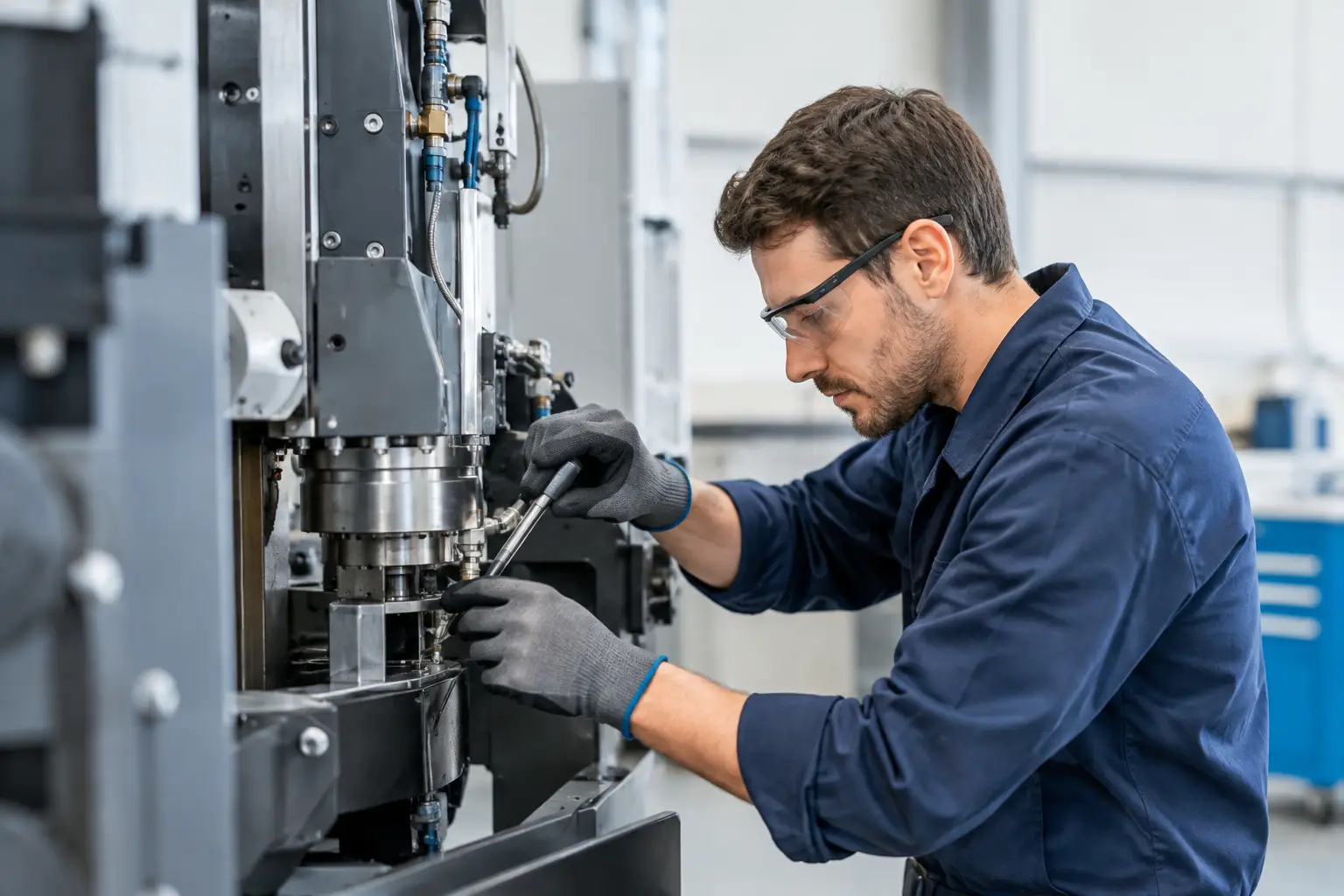
A technician may diagnose a failed conveyor, replace bearings or belts, align a motor, repair a pneumatic leak, or troubleshoot a sensor that is shutting down a production line. In more automated facilities, the work may also involve variable frequency drives, robotics, PLC-related troubleshooting, servo systems, and machine vision components.
The title can differ from one employer to another. A company may advertise for an industrial maintenance technician, maintenance mechanic, electro-mechanical technician, reliability technician, or multi-craft maintenance technician. Reading past the title matters. The job description should clarify the equipment, shift, technical expectations, and whether the role leans primarily mechanical, electrical, or both.
What Ohio Employers Look For
A strong maintenance candidate is rarely defined by one certificate or one brand of equipment. Employers need proof that the person can assess a problem, make a safe repair, and return equipment to service without creating a larger issue.
Mechanical ability is a foundation. That can include hydraulics, pneumatics, bearings, gearboxes, chains, sprockets, shafts, pumps, welding, fabrication, and precision alignment. Electrical capability is increasingly valuable, especially in facilities that depend on automation. Reading electrical prints, using a multimeter correctly, tracing circuits, replacing motors, and understanding controls are common expectations.
Troubleshooting discipline separates many qualified applicants from average ones. A hiring manager wants to hear how you isolate a fault rather than simply what part you replaced. Explain how you checked the machine state, reviewed alarms, tested components, verified the root cause, and confirmed the repair. This shows sound judgment under production pressure.
Safety also carries real weight. Lockout/tagout, arc-flash awareness, machine guarding, confined-space procedures, and proper use of personal protective equipment are not resume filler. Employers need technicians who protect themselves, their coworkers, and the operation while getting the job done.
Machine Maintenance Technician Jobs Ohio: Where Demand Is Strong
Ohio has a broad industrial base, which gives maintenance professionals more choices than they may realize. Northeast Ohio has deep roots in metalworking, rubber, polymers, machining, and general manufacturing. Central Ohio continues to attract advanced manufacturing, distribution, and technology-driven production. Cincinnati, Dayton, Toledo, and other markets support automotive, aerospace, food, packaging, consumer products, and related supply-chain operations.
The right opportunity depends on more than location. A technician who prefers rebuilding mechanical systems may thrive in a heavy industrial environment. Someone with strong controls experience may find better long-term fit in a highly automated plant. Food and beverage operations can offer steady work but may require strict sanitation procedures. Foundry, steel, and aggregate settings can provide challenging equipment work, often with more demanding physical conditions.
Shift is another major consideration. Second- and third-shift maintenance roles frequently pay a differential and may offer faster entry for candidates building experience. The trade-off is schedule impact. A higher hourly rate can be worthwhile, but only if the rotation, overtime expectations, commute, and family needs are workable.
How to Make Your Resume Stronger
Maintenance resumes should be specific. Listing “machine repair” alone does not tell an employer whether you worked on CNC equipment, high-speed packaging lines, stamping presses, injection molding machines, or automated assembly systems.
Use your experience to show the environment and the result. For example, describe troubleshooting hydraulic and pneumatic failures on production equipment, performing preventive maintenance on conveyors and motors, or supporting PLC-based equipment alongside controls personnel. If you reduced downtime, improved changeover reliability, trained junior technicians, or helped launch a new line, include that information.
A clear skills section is useful when it reflects real hands-on capability. Do not claim PLC programming if you only reset faults or assist an automation engineer. There is no downside to being precise. A technician who honestly states “PLC troubleshooting and I/O diagnosis” may be a better match than someone who overstates programming experience and is screened out during an interview.
Credentials can help, particularly when they support documented experience. Technical school training, apprenticeship completion, OSHA training, electrical coursework, welding certifications, and manufacturer-specific training may all strengthen an application. Still, most employers will weigh demonstrated troubleshooting ability and safety habits heavily.
Prepare for the Maintenance Interview
Technical interviews often focus on how you think. Hiring managers may ask what you would do if a motor trips repeatedly, a pneumatic cylinder moves slowly, or a machine will not cycle after a sensor replacement. They are not always looking for one perfect answer. They want a logical process.
Be ready to discuss a difficult repair from start to finish. Explain the symptoms, the checks you performed, the root cause, the repair, and how you verified normal operation. If the repair required coordination with operators, engineering, outside vendors, or a supervisor, say so. Maintenance is hands-on work, but it is also team work.
Candidates should ask direct questions, too. Find out what equipment causes the most downtime, how much of the work is reactive versus preventive, whether technicians receive training, and what advancement looks like. Ask about the maintenance team size and on-call expectations. A good employer should be clear about the work conditions before an offer is accepted.
A Better Match Benefits Both Sides
For employers, a rushed maintenance hire can create expensive turnover. A candidate may have solid mechanical skills but lack the electrical knowledge required for the plant. Another may be technically capable but unwilling to work the necessary shift. Defining the real requirements early saves time for everyone.
For job seekers, the best role is not always the first opening with the highest posted wage. Consider the stability of the operation, quality of leadership, training available, safety culture, overtime pattern, and the equipment you will work on. These details affect both job satisfaction and future career growth.
IntegrityJobs.com works with Ohio manufacturing and technical employers that need accurate, practical matches, not stacks of unqualified resumes. With specialized recruiting experience, the focus is on understanding the job, the plant environment, and the technician behind the resume.
A maintenance career is built one solved problem at a time. Choose opportunities where your skills are respected, your safety matters, and the equipment gives you room to keep learning.