


Last Updated: October 31, 2026
Quick Summary
Recruiting engineers for Ohio plants works best as a five-step process: write a job description that filters for fit, define the plant engineering skills you actually need, source candidates where Ohio technical talent looks, screen for retention, and bring in an Ohio engineering recruitment agency when the role stays open too long. Speed matters, because a fast, respectful process is itself a retention tool.
- Split job requirements into must-have and nice-to-have, and name the actual equipment and systems.
- Ask the plant manager and maintenance lead to name the top three skills that separate a good hire.
- Source across referrals, technical schools, industry associations, and targeted outreach.
- Bring candidates on the plant tour early so poor fits self-select out.
- Engage an agency when the role has been open longer than your target fill time.
Table of Contents
- Why Recruiting Engineers for Ohio Plants Is Harder Than It Looks
- Step 1: Write a Plant Engineer Job Description That Filters for Fit
- Step 2: Define the Plant Engineering Skills You Actually Need
- Step 3: Source Candidates Where Ohio Technical Talent Actually Looks
- Step 4: Screen for Retention, Not Just the Resume
- Step 5: Decide When to Bring In Engineering Recruitment Agencies in Ohio
- Common Mistakes That Slow Down Plant Engineering Hires
- Start Your Plant Engineering Search With IntegrityJobs
- Frequently Asked Questions
Why Recruiting Engineers for Ohio Plants Is Harder Than It Looks
Recruiting engineers for Ohio plants is a slow, competitive grind, and most hiring teams underestimate why. Plant engineering roles demand a rare mix of technical depth, shift flexibility, and tolerance for a factory floor. Fewer candidates want that mix than the job boards suggest.
At IntegrityJobs, we have spent three decades placing technical talent across Ohio. The shortage is not a shortage of engineers. It is a shortage of engineers who fit a plant environment and will stay past the first year.
Three forces make the search harder:
- Aging plants, modern equipment. Controls, robotics, and CNC systems need people who understand both old infrastructure and new tech.
- Competition from remote work. Engineers with software skills can work from a laptop anywhere. A plant floor has to win them back.
- Thin local pipelines. Many plants sit far from the metro areas where engineering graduates cluster.
The fix is a process, not a lucky posting. For a proven, step-by-step approach, see how to recruit plant engineers effectively. Below, we break down five steps that can shorten the search and support retention. We also cover how to recruit plant engineers without burning months on the wrong shortlist.
Step 1: Write a Plant Engineer Job Description That Filters for Fit
A plant engineer job description is a filtering tool, not a wish list. The best ones scare off poor fits early and pull in the right people fast.
Most postings fail because they list every skill the plant has ever used. That produces a flood of unqualified resumes and a shortlist that still misses.
What to Put in the Requirements Section
Split requirements into two buckets: must-have and nice-to-have. Be ruthless about the first bucket.
- Must-have: the 3-5 skills the person cannot do the job without
- Nice-to-have: everything else, clearly labeled
- Environment: shift schedule, on-call rotation, and physical demands
- Certifications: only those the role legally or practically requires
Name the actual equipment and systems. “Experience with CNC programming and quality inspection” tells a candidate far more than “strong technical skills.”
Watch out: vague requirements like “team player” or “detail-oriented” filter nothing. They also invite applications from people who will not last a week on the floor.
Step 2: Define the Plant Engineering Skills You Actually Need
Plant engineering skills fall into three groups: technical, operational, and interpersonal. Most job descriptions over-index on the first and ignore the other two.
Technical skills are the easy part to list: process controls, mechanical systems, electrical troubleshooting, CAD, and maintenance planning. Operational skills cover safety protocols, lean manufacturing, and root-cause analysis. Interpersonal skills decide whether the hire survives month six.
Here is the distinction that matters most. A brilliant engineer who cannot talk to a line operator will struggle. A solid engineer who can translate between the floor and the front office will thrive.
Ask the plant manager and the maintenance lead to name the top three skills that separate a good hire from a great one. Their answers usually differ from the HR job description, and their version is the one to hire against.
Step 3: Source Candidates Where Ohio Technical Talent Actually Looks
Ohio technical talent does not live on one job board. It clusters in trade schools, community college programs, professional associations, and referrals from current staff.
Spread your sourcing across four channels:
- Referrals from your own team. Current engineers know who is good and who is available.
- Technical schools and apprenticeship programs. Build relationships before you have an opening.
- Industry associations and local manufacturing groups. These networks surface passive candidates.
- Targeted outreach. Direct messages to engineers with the exact skill mix you need.
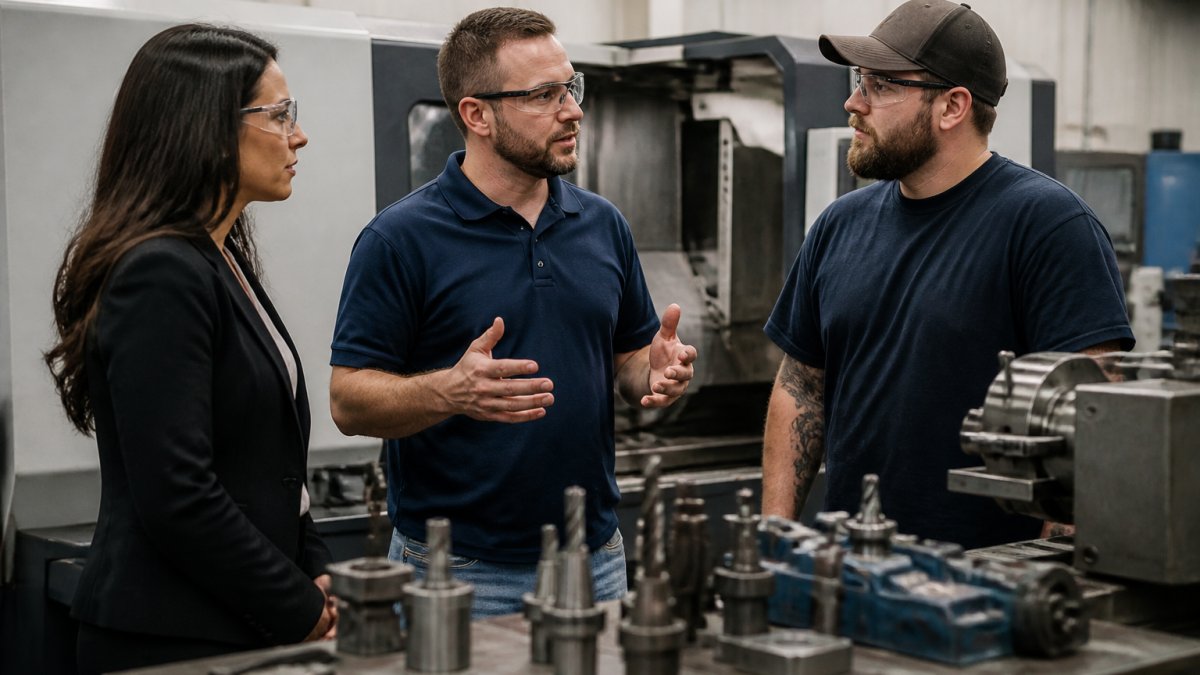
Rural and Small-Market Sourcing
Plants outside the big metros often face a harder search, since city-focused job ads may reach fewer local candidates.
Lean on local networks and highlight what the area offers beyond the paycheck. For a deeper look at reaching tradespeople in smaller markets, see how to hire skilled trades in rural Ohio.
Step 4: Screen for Retention, Not Just the Resume
The resume tells you what a candidate has done. It says almost nothing about whether they will still be on the floor in a year.
Screen for retention with three questions:
- Why this plant? Candidates who researched your operation stay longer.
- How do they handle a bad shift? Ask for a real example, not a hypothetical.
- What keeps them somewhere? Pay matters, but so do schedule stability and respect from supervisors.
A common mistake is skipping the plant tour until the final round. Bring candidates on the floor early. People who dislike the environment self-select out, and you save everyone weeks.
Step 5: Decide When to Bring In Engineering Recruitment Agencies in Ohio
Engineering recruitment agencies in Ohio make sense when your internal team is stretched, the role has been open for weeks, or you need a specialized skill mix fast.
Bring in an agency when:
- The role has been open longer than your target fill time
- Your HR team lacks plant-floor context
- You need contract or contract-to-hire flexibility
- A bad hire would cost more than the recruiting fee
Before you engage anyone, set your pay range against real market data. Our Ohio manufacturing compensation guide is one place to start when planning pay. If you want to see the full best-practice approach, read the best way to recruit engineers in Ohio.
Bring in an Ohio engineering recruitment agency when one of these situations applies.
| Situation | Signal to bring in an agency |
|---|---|
| Role stays open | Open longer than your target fill time |
| HR lacks context | HR team lacks plant-floor context |
| Flexibility needed | Need contract or contract-to-hire flexibility |
| Bad hire risk | Bad hire would cost more than the recruiting fee |
Common Mistakes That Slow Down Plant Engineering Hires
Slow hires usually trace back to a handful of avoidable mistakes. Fix these and the timeline tightens.
- Waiting for the perfect candidate. A strong fit who starts in three weeks beats a perfect fit who never applies.
- Letting HR screen alone. Plant managers need a voice in the first interview.
- Ignoring the candidate experience. Slow replies and vague timelines lose good engineers fast.
- Skipping the plant tour. Candidates who never see the floor back out later.
- Lowballing the offer. Engineers compare offers, and a slow, low offer loses every time.
What most guides miss is that speed is a retention tool. Candidates who move through a fast, respectful process arrive with a better first impression of the plant.
Start Your Plant Engineering Search With IntegrityJobs
The hardest part of recruiting engineers for Ohio plants is not finding names. It is finding the right person fast enough to beat the competition and building a process that keeps them.
IntegrityJobs is a woman-owned staffing agency with 30 years of placing technical talent across Ohio. We focus on engineering, manufacturing, and IT roles, and we offer flexible hiring solutions including contract and contract-to-hire. Our values are simple: affordability, speed, fairness, and friendliness.
If you want recruiters who understand plant hiring, connect with Ohio engineering recruiters who get it right.
Frequently Asked Questions
What does a plant engineer do day to day?
A plant engineer keeps production equipment and facility systems running. That means troubleshooting breakdowns, planning preventive maintenance, managing capital projects, and improving throughput and safety. In Ohio plants, the role often blends mechanical and electrical work with process improvement. When recruiting engineers for these roles, look for people who can read a P&ID, lead a root-cause analysis, and work alongside maintenance technicians on the floor. The job description should list the specific equipment and systems they will own, not just generic duties.
Which plant engineering skills matter most when hiring?
Prioritize three groups: technical skills (PLC troubleshooting, CAD, preventive maintenance systems, root-cause analysis), compliance knowledge (OSHA standards, lockout/tagout, machine guarding), and people skills (working with hourly maintenance crews and production leads). Reliability and project management experience separate strong candidates from paper-qualified ones. Ask for examples of equipment they kept running and projects they finished on budget. A candidate who can explain a downtime problem they solved in plain language usually outperforms one with a longer resume and no stories.
How do engineering recruitment agencies in Ohio differ from national firms?
Local agencies know which plants are hiring, what shift schedules look like, and which skills are scarce in specific counties. When you talk to any agency, ask for recent placements at Ohio manufacturers, how they vet trade skills, and what happens if a contract-to-hire placement does not work out. IntegrityJobs has been placing technical talent since 1996.
How can a company reduce time to hire for plant engineering roles?
Shorten the pipeline at both ends. Write the job description before you post it, with must-have skills separated from nice-to-haves. Pre-book interview slots so candidates are not waiting a week for a callback. Limit the process to two interviews plus a plant walkthrough. Keep a warm bench of candidates you would hire if a slot opened.
Your next open plant engineering role does not have to sit empty for months. Get started with IntegrityJobs and build a shortlist of vetted, plant-ready engineers who fit your floor and stay.