
Table of Contents
- Why Hiring Skilled Machinists in Ohio Is So Competitive Right Now
- Where to Source Skilled Machinists in Ohio
- Machinist Interview Questions That Reveal Real Skill
- Building a Machinist Skills Assessment That Actually Works
- CNC Machinist Recruiting: What to Look For Beyond the Resume
- How to Attract and Retain Experienced Machinists in Ohio
- Frequently Asked Questions
Last Updated: October 21, 2026
Why Hiring Skilled Machinists in Ohio Is So Competitive Right Now
Hiring skilled machinists in Ohio has become one of the toughest assignments in industrial recruiting. The reason is simple: demand outpaces supply, and the workers who remain know it. At IntegrityJobs, we have watched this shortage reshape how plants across the state build their teams.
The math is unforgiving. A generation of experienced toolmakers and setup machinists is retiring, and fewer young workers are entering the trade to replace them. Meanwhile, shops running CNC equipment, aerospace parts, and medical components all compete for the same narrow pool.
That imbalance changes the negotiation. Candidates ask about overtime, shift flexibility, and sign-on terms before they ask about the work itself. Employers who treat machinist recruiting like a standard office hire lose the race before it starts.
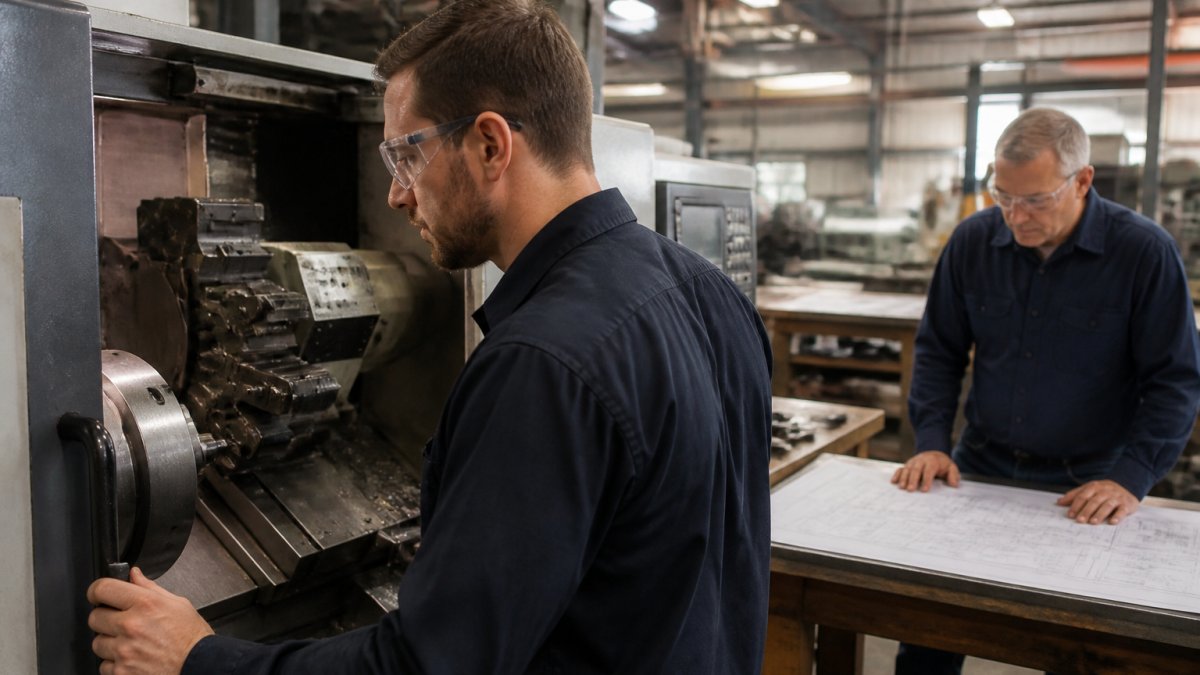
The shortage is structural, not seasonal. Build a recruiting pipeline that runs continuously instead of scrambling when a machine sits idle.
Where to Source Skilled Machinists in Ohio
Sourcing splits into three channels, and the strongest hiring plans use all of them at once. Relying on a single channel leaves you exposed when one dries up. Here is how we think about each.
Job Boards, Trade Schools, and Word of Mouth
Job boards cast a wide net but deliver volume over precision. Trade school partnerships take longer to build yet produce candidates who already know the equipment. Word of mouth remains the quiet workhorse, because machinists talk to other machinists.
- Trade schools: Build relationships with program instructors before you have an opening
- Job boards: Use precise titles like “CNC setup machinist” instead of generic “machine operator”
- Employee referrals: Offer a referral bonus and pay it fast when the hire sticks
- Apprenticeship programs: Grow your own talent when the experienced pool runs dry
Partnering With a Skilled Machinist Staffing Agency
A skilled machinist staffing agency shortens the timeline when a machine needs an operator now. The right partner already knows which candidates can run your specific controls and hold your tolerances.
Our recruiters specialize in manufacturing and skilled trades, and we cover all 88 Ohio counties, including rural plants that national firms tend to overlook. We offer contract and contract-to-hire arrangements so you can evaluate fit before committing.
Ask any staffing partner how they verify machine-specific skills before sending a candidate. If the answer is “we review resumes,” keep looking.
Machinist Interview Questions That Reveal Real Skill
The best machinist interview questions test judgment, not vocabulary. Anyone can recite the definition of a tolerance. Fewer candidates can explain what they do when a part drifts out of spec mid-run.
Start with process questions. Ask the candidate to walk through a setup from print to first article. Listen for how they sequence operations, choose tooling, and verify dimensions. Vague answers signal shallow experience.
Then move to troubleshooting. Describe a chatter problem or a finish that keeps failing inspection. Strong machinists ask clarifying questions about material, speed, and fixture rigidity before offering a fix.
- “Walk me through your last setup from drawing to first-piece inspection.”
- “A bore keeps coming in oversized. What do you check first?”
- “How do you decide between a manual check and a CMM for a given feature?”
- “Tell me about a time you caught a programming error before it scrapped a run.”
Building a Machinist Skills Assessment That Actually Works
A machinist skills assessment should measure what the job demands, not what a test is easy to grade. Paper quizzes miss the point. Practical evaluation is where real ability surfaces.
We recommend a two-part screen. First, a short hands-on task on equipment the candidate will actually run, supervised by a lead machinist. Second, a print-reading exercise that includes a tolerance stack and a GD&T callout. Together they reveal setup skill, print literacy, and attention to detail.
Score each candidate on a simple rubric so comparisons stay fair:
| Assessment Area | What to Test | Why It Matters |
|---|---|---|
| Print reading | GD&T callouts, tolerance stack | Prevents scrap and rework |
| Setup skill | Fixture, tooling, first article | Confirms real machine time |
| Inspection | Manual tools, CMM basics | Protects quality standards |
| Troubleshooting | Diagnosing chatter, finish, size | Separates operators from machinists |
Skipping a practical assessment to save a day often costs weeks in rework and turnover. A bad setup hire can scrap material and damage tooling before anyone notices.
CNC Machinist Recruiting: What to Look For Beyond the Resume
CNC machinist recruiting rewards employers who read between the lines. A resume lists machines and years. It rarely shows how a person thinks when a job goes sideways.
Look for ownership language. Candidates who say “I set up and proved out” carry more weight than those who “operated” a machine. Ask about programming exposure, even for setup roles, because G-code literacy predicts adaptability.
Watch for the gap between claimed and demonstrated skill. Many applicants list controls they have only watched run. A short practical task settles the question faster than any reference call.
- Programming depth: Can they edit G-code and adjust offsets confidently?
- Quality mindset: Do they inspect their own work or wait for QC?
- Versatility: Have they moved between lathes, mills, and multi-axis equipment?
- Reliability signals: Shift history and tenure patterns tell a story
How to Attract and Retain Experienced Machinists in Ohio
Retention starts before the first day. Experienced machinists choose employers who respect their craft, and they leave when that respect disappears. Pay matters, but it is rarely the only reason people stay.
Offer clean, well-maintained equipment. A skilled machinist notices worn ways and sloppy tooling within an hour. Invest in climate control, good lighting, and organized tool cribs, because these signal that you value the work.
Build a clear path forward. Setup machinists who see a route to lead, programmer, or process engineer stay longer than those stuck at one station. Pair that with predictable schedules and fair overtime rotation.
Exit interviews with departing machinists reveal more about your shop than any engagement survey. Ask what would have kept them, and act on the answer.
We focus on fit and retention, not just the fill. Our contract-to-hire model lets both sides test the relationship before committing.
Frequently Asked Questions
How long does it take to hire a skilled machinist in Ohio?
Timelines vary by specialty and location. A basic CNC operator search can move in a few weeks, while a programmer with quality inspection experience often takes longer because the candidate pool is smaller. Working with a skilled machinist staffing agency that already has vetted candidates in its network usually shortens the process, since screening and skills verification happen before the first interview.
What qualifications should employers look for when hiring a machinist?
Look for hands-on experience with the specific machines and controls used in your shop, the ability to read blueprints and GD&T symbols, and a track record of holding tolerances on production runs. For CNC roles, programming and setup experience matters, but so does quality inspection familiarity. Ask for examples of parts they’ve made and problems they’ve solved, not just a list of machines they’ve touched.
How do you assess a machinist’s CNC programming and setup skills?
A practical machinist skills assessment beats a resume every time. Use a short written test on G-code reading and blueprint interpretation, then a supervised setup task on a machine similar to yours. Ask candidates to walk through a tool change or offset adjustment out loud. This shows whether they understand why a setup works, not just whether they can repeat steps from memory.
What is the difference between a CNC machinist and a manual machinist?
A CNC machinist programs and operates computer-controlled equipment, focusing on G-code, offsets, and setup for repeatable production. A manual machinist runs lathes, mills, and grinders by hand, which suits one-off parts, repairs, and tooling work. Many shops need both, and some experienced machinists cross over. Clarify which type your open role actually requires before you post the job.
Ohio manufacturers face a real shortage, but the plants that win treat machinist recruiting as a continuous discipline rather than a last-minute scramble. IntegrityJobs brings 30 years of technical recruiting experience, a specialized focus on manufacturing and skilled trades, and statewide reach across all 88 Ohio counties. Our contract and contract-to-hire options help you confirm fit and retention before you commit. Get started with IntegrityJobs and build a machinist team that stays.