

Last Updated: November 25, 2026
Quick Summary
Contract staffing for manufacturing companies fills production and technical roles through a staffing agency on a fixed-term basis, scaling headcount up or down as order volume changes. Plants that plan for demand swings generally fill roles faster than plants that react to them.
- Production, assembly, general labor, and machine operator roles are typically filled within days.
- Contract-to-hire lets you evaluate a worker on your floor before extending a permanent offer.
- Realistic fill times run from a few days for general labor to four weeks or more for engineers.
- Confirm pricing, worker classification, and contract terms in writing before the first placement.
- Give temporary workers the same onboarding, safety training, and supervision as permanent staff.
Table of Contents
- Why Contract Staffing Fits Manufacturing’s Demand Swings
- The Manufacturing Roles Contract Staffing Fills
- Contract-to-Hire vs Direct Hire: Choosing the Right Model
- How to Vet a Manufacturing Staffing Agency
- What Realistic Manufacturing Staffing Timelines Look Like
- Managing Temporary Manufacturing Workers on the Floor
- Contract Terms, Pricing, and Compliance to Confirm Before You Sign
- Build Your Contract Staffing Plan Before the Next Order Spike
- Frequently Asked Questions
Why Contract Staffing Fits Manufacturing’s Demand Swings
Contract staffing for manufacturing companies is the practice of filling production and technical roles through a staffing agency on a fixed-term basis, scaling headcount up or down as order volume changes.
The core problem is that manufacturing demand rarely moves in a straight line. A large order lands, and you need six machinists by the end of the month.
Contract staffing solves the mismatch. See how manufacturing staffing in Cleveland, Ohio fills production gaps fast.
Below, we break down which roles contract staffing fills, how it compares with direct hire, how to vet an agency, and what to confirm before you sign.
The Manufacturing Roles Contract Staffing Fills
Contract staffing covers nearly every hourly and technical role on a plant floor, from general labor to licensed engineers. The right agency matches the role type to the right hiring model, rather than sending the same resume pool for every opening.
Production, Assembly, and Machine Operator Roles
These are the highest-volume contract roles. Production jobs, assembly jobs, general labor, and machine operators are typically filled within days because the skill requirements are concrete and the candidate pool is broad.
A common mistake is treating all machine operator roles as interchangeable. A press brake operator and a CNC machinist need different screening. Spell out the machines, tolerances, and shift requirements in the requisition so the agency can match candidates to those details.
Engineering and Technical Positions
Manufacturing engineers, industrial engineers, quality inspectors, and maintenance technicians are harder to fill and often justify contract-to-hire. Technical recruitment for these roles requires an agency that can read a drawing, understand tolerances, and screen for specific software or controls experience.
A candidate with both CNC programming and quality inspection experience is rare. When you need that combination, say so up front.
Contract-to-Hire vs Direct Hire: Choosing the Right Model
Contract-to-hire lets you evaluate a worker on your floor before extending a permanent offer, while direct hire commits you from day one. The right model depends on how confident you are in the role definition and how much hiring risk you can absorb.
Use this decision guide:
| Situation | Best Model | Why |
|---|---|---|
| Short-term order spike | Temporary contract | Ends with the demand |
| New role, unclear fit | Contract-to-hire | Try before you commit |
| Proven role, urgent need | Direct hire | Fastest path to permanence |
| Specialized technical skill | Contract-to-hire | Validates skill on your equipment |
| Seasonal production | Temporary contract | Scales down cleanly |
Contract-to-hire carries a real trade-off: the trial period adds time before you have a permanent employee, and some candidates prefer direct placement. For a deeper walkthrough of the decision, see our guide on how to decide if contract-to-hire is right in 2026.
How to Vet a Manufacturing Staffing Agency
Vetting a manufacturing staffing agency comes down to several checks: verified placements in your sector, a real screening process, transparent pricing, references from comparable plants, and a clear service-level commitment on fill times. The harder question is how to verify the answers, because many agencies will claim manufacturing experience and a rigorous screening process.
Verify placements, not claims
Ask for the number of manufacturing placements in the last 12 months, then ask for two references from plants that run similar equipment and shift structures to yours. Agencies with deep manufacturing experience can typically name specific machines, controls platforms, and certification requirements without prompting. When you call references, ask how quickly the agency replaced a worker who did not work out, not just how quickly the first placement arrived.
Test the screening process with a real requisition
The most reliable vetting method is to hand the agency one live requisition and watch how it responds. A manufacturing-specific screening process should validate machine operation, technical skills, certifications, shift availability, and prior manufacturing experience before anyone reaches your floor. For a machinist role, that means confirming the specific machines and tolerances the candidate has run, not just years of experience. For maintenance technicians, it means verifying electrical or mechanical certifications and the controls platforms they know. Ask the agency to describe, step by step, how it would screen for your hardest-to-fill role. Vague answers are a signal.
Confirm pricing transparency before the first placement
Ask exactly what the bill rate includes, how overtime is handled, and whether conversion fees apply if you hire a contract worker permanently. A written quote beats a headline rate, because markup structures and overtime treatment vary widely. The Society for Human Resource Management guidance on staffing partnerships stresses documenting expectations in writing. Get the answers in the contract, not just the sales call.
Pin down the service-level commitment
Ask what fill-time guarantee the agency offers, what happens if it misses, and who your single point of contact is. A replacement guarantee matters more than a fill-time promise, because a fast placement that leaves in two weeks costs more than a slower one that stays. Confirm notice requirements for ending an assignment and any non-solicitation clause before signing.
Ask these questions before signing:
- How many manufacturing placements have you made in the last 12 months, and on what equipment?
- Walk me through your skills validation for machinists and maintenance technicians.
- How do you source candidates in our specific labor market, and what is your bench depth there?
- What is your fill-time guarantee and replacement policy, and what happens if you miss either?
- Can you provide two references from manufacturers that run equipment similar to ours?
- Who is our single point of contact, and what is the response-time commitment?
For a full list, read 7 questions to ask a manufacturing staffing agency.
What Realistic Manufacturing Staffing Timelines Look Like
Realistic fill times run from a few days for general labor to several weeks for specialized engineering roles. Be cautious of anyone promising same-day placement for a skilled machinist. The more useful question is what drives the timeline, because most of the delay sits in the requisition and the approval chain, not in the candidate pool.
A common approach is to set expectations by role tier:
- General labor and assembly: days, given a broad candidate pool
- Machine operators with specific equipment experience: one to two weeks
- Maintenance technicians and quality inspectors: two to four weeks
- Manufacturing and industrial engineers: four weeks or more
What actually drives the timeline
Four factors account for most of the variance. First, requisition clarity: a request that names the machines, tolerances, shift, and certification requirements moves faster than one that says “experienced machinist.” Second, shift and schedule: second and third shift roles take longer because the candidate pool is smaller, and swing-shift or rotating schedules add screening time. Third, pay rate relative to the local market: a bill rate below market extends the search by weeks, while a competitive rate shortens it. Fourth, approval speed on your side: every day a requisition sits in a queue is a day the agency cannot source against it.
How to compress the timeline
Share the deadline on day one and ask the agency to tell you honestly whether it is achievable and which roles may need to flex. Pre-approve a pay range and a bill rate before the requisition opens so the agency can quote candidates without a back-and-forth. Standardize your requisition template so every opening carries the same equipment, certification, and shift detail.
Watch out: a fill-time guarantee that is not paired with a replacement guarantee can push an agency to place a marginal candidate to hit the date, which costs more in turnover than a slower, better-matched hire.
Our breakdown of staffing agency recruitment timeframes explains what drives each tier.
Managing Temporary Manufacturing Workers on the Floor
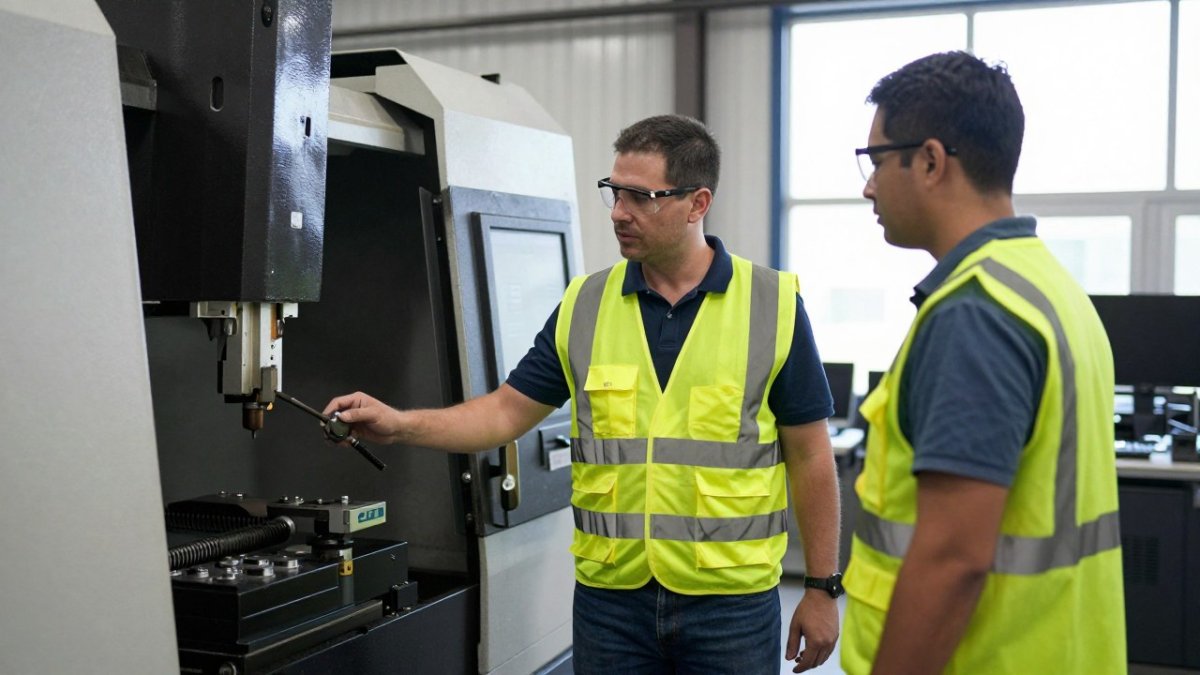
Temporary manufacturing workers perform best when they receive the same onboarding, safety training, and supervision as your permanent staff. Treat them as a short-term afterthought, and attendance and quality suffer.
Practical steps that make a difference:
- Assign a floor mentor for the first week
- Cover safety procedures before the first shift, not after
- Set clear quality checkpoints and show the worker what good output looks like
- Give feedback early and directly, and loop the agency in on attendance or fit issues
Fit and retention can improve when the agency stays involved after placement. Once temps are on the floor, our guide to technical staffing for Ohio manufacturing plants covers onboarding and management in more detail.
Contract Terms, Pricing, and Compliance to Confirm Before You Sign
Contract terms, pricing models, and worker classification are the three areas where manufacturers most often get surprised. Confirm all three in writing before the first placement.
Pricing models. Agencies typically bill either a markup on the worker’s hourly pay or a flat hourly rate.
Worker classification. Contract workers are generally employees of the staffing agency, which carries the payroll, workers’ compensation, and tax obligations. The IRS guidance on worker classification explains the distinction between employees and independent contractors.
Contract terms. Check the guarantee period, replacement policy, notice requirements for ending an assignment, and any non-solicitation clause.
Build Your Contract Staffing Plan Before the Next Order Spike
The plants that handle demand swings well do not start calling agencies when the order lands. They build a staffing plan in advance: role tiers, target fill times, a vetted agency partner, and a clear budget for contract labor.
That is where IntegrityJobs comes in. We are a 100% woman-owned staffing agency with 30 years of placing engineering, manufacturing, IT, and skilled trades talent across all 88 Ohio counties.
Get started with IntegrityJobs and build a contract staffing plan that holds up when the next surge hits.
Frequently Asked Questions
How does contract staffing work for manufacturing companies?
A manufacturing staffing agency recruits, screens, and employs the workers, then assigns them to your plant for a set period. The agency handles payroll, taxes, and workers’ compensation; you direct the day-to-day work and pay a bill rate that covers wages plus the agency’s fee. When demand shifts, you scale the crew up or down without layoffs landing on your books. Many manufacturers start with a defined production need, test the worker’s fit on the floor, and convert strong performers to permanent staff later.
Is contract-to-hire worth it compared with direct hire?
Contract-to-hire makes sense when you want to see a machinist or technician run a real job before committing to a permanent offer. You get weeks of evidence on attendance, quality, and fit that an interview cannot provide. Direct hire is faster and cheaper per placement when you already know the role and the local talent pool is deep. For hard-to-fill skilled trades or roles with high turnover risk, the trial period usually pays for itself by avoiding a bad permanent hire.
How long does it take to staff a manufacturing position?
Timelines depend on the role and the local labor market. General labor and assembly roles can often be filled within days once requirements are clear. Machine operators and CNC machinists generally take longer than general labor because screening includes skills checks. Give the agency exact shift details, pay range, and must-have certifications up front; vague requirements are the most common reason a search stalls.
What should a manufacturing company look for in a staffing agency?
Look for a firm that already places people in industrial production, not a generalist office agency. Ask how they test machine operator and CNC skills and how they verify certifications. Request references from manufacturers similar in size to yours. Confirm the bill rate structure, conversion fees if you hire a contractor permanently, and replacement guarantees in writing. A good manufacturing staffing agency can describe its screening process in specific terms, not generic claims about a resume database.