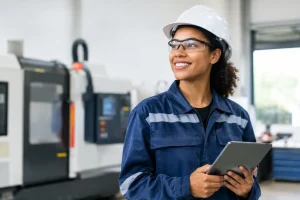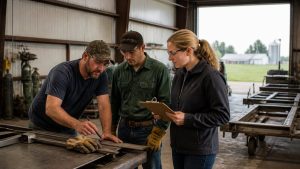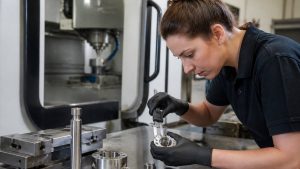


A vacant maintenance technician, controls engineer, or CNC machinist position can affect far more than one department. It can slow production, strain the team that remains, delay preventive maintenance, and create quality risk. This guide to hiring in Akron manufacturing is built for employers who need to fill critical technical roles without wasting weeks on applicants who do not match the work.
Akron employers compete for people with hands-on experience, reliable work habits, and skills that transfer directly to the plant floor. Hiring well starts with a clear view of the job, a realistic process, and a recruiting partner that understands industrial work.
Start With the Work, Not the Job Title
Manufacturing titles can mean very different things from one facility to another. A manufacturing engineer may focus on process improvement and capital projects at one company, then spend most of the day troubleshooting automation, tooling, and work instructions at another. A maintenance mechanic might need basic mechanical aptitude in one environment and advanced electrical, hydraulic, pneumatic, and PLC diagnostic skills in another.
Before posting a role or engaging a recruiter, define what the person must accomplish in the first six to twelve months. Ask which equipment they will support, what shifts they will cover, what problems are currently costing the plant time or money, and which credentials are genuinely required.
This step prevents a common hiring mistake: writing a wish-list job description that eliminates capable candidates. If a candidate needs experience with a particular machine brand, say so. If the company can train a strong technician on that equipment, separate the true requirement from the preferred qualification.
Build a practical hiring profile
A useful hiring profile covers more than education and years of experience. It explains the working conditions, schedule, reporting relationship, compensation range, safety expectations, and the specific systems the person will use. For skilled trades roles, include the actual troubleshooting work involved. For engineering roles, identify whether success depends more on design expertise, process ownership, project management, or leadership on the floor.
Be direct about shift requirements and overtime. A third-shift role with regular weekend coverage can be a good opportunity for the right person, but hiding that reality until late in the process creates preventable turnover. Clear expectations are a sign of respect for candidates and save hiring managers time.
Set Pay Against the Real Akron Manufacturing Market
Pay matters, but candidates evaluate the full offer. Stable schedules, predictable overtime, health benefits, retirement contributions, plant conditions, training opportunities, commute, and management quality all affect whether a qualified person accepts and stays.
Still, employers should not assume that a familiar pay range will draw the same talent it did several years ago. Experienced machinists, maintenance professionals, welders, controls specialists, quality leaders, and engineers often have options. When a position has unusual technical requirements, off-shift hours, or a demanding environment, the compensation package needs to reflect that reality.
There is a trade-off. Raising a base rate may improve response and shorten the search, but it can also create internal equity questions. Lowering requirements may widen the candidate pool, but it may require stronger onboarding and more supervisor time. The right answer depends on the urgency of the opening, the capability of the current team, and the cost of leaving the role unfilled.
A disciplined employer reviews why prior candidates declined. Was the gap compensation, schedule, commute, interview speed, role clarity, or confidence in the company? Those answers are more useful than simply concluding that no one wants to work.
Screen for Evidence of Skill
Resumes are a starting point, not proof of technical ability. The strongest manufacturing hiring processes use a structured conversation to test whether experience is relevant to the specific role.
For a maintenance candidate, ask for a recent example of diagnosing an equipment failure. What did they observe first? How did they isolate mechanical, electrical, pneumatic, or control issues? What was the repair, and what did they do to prevent recurrence? A qualified technician should be able to explain their thinking in practical terms.
For a manufacturing or quality engineer, ask about a process problem they owned. Look for details about root-cause analysis, data, cross-functional communication, corrective action, and measurable results. Technical knowledge matters, but so does the ability to work productively with operators, maintenance teams, supervisors, and leadership.
Use assessments carefully. A basic skills test, work sample, weld test, or machining evaluation can add useful evidence when it reflects the actual work. An overly complicated test that bears little resemblance to the job can drive away good people and tell you very little.
Move Fast Without Cutting Corners
Technical candidates are rarely available for long, especially when they are currently employed. A slow process sends a message that the company is disorganized or uncertain. It also gives competitors time to make a clearer, faster offer.
Set the interview process before candidates enter it. Decide who will screen, who will interview, who can approve pay, and how quickly feedback will be delivered. For many manufacturing roles, one focused interview with the hiring manager and a practical facility conversation can be more effective than several repetitive rounds.
Speed should not mean skipping reference checks, safety discussions, or technical validation. It means removing avoidable delays between those steps. If a hiring manager needs a week to review a resume or two weeks to provide interview feedback, the issue is process ownership, not candidate availability.
Candidates also need timely communication when the answer is no. Professional follow-up protects your reputation in a close-knit industrial market. The person who is not the right fit today may be an excellent match for a future opening, or may know someone who is.
Sell the Job Honestly During the Interview
An interview is not only an evaluation. It is also the candidate’s best opportunity to understand the operation. Show them the department when appropriate. Explain the equipment, the team structure, the training plan, and what a good first 90 days looks like.
Be candid about the difficult parts of the job. If the plant is hot in summer, if production schedules change, or if the role requires responding to breakdowns under pressure, say so. Honest expectations reduce early turnover and build trust with the people you want to hire.
The employer should also be ready to answer why the position is open, how long employees tend to stay, what advancement looks like, and how leadership handles safety and improvement ideas. Skilled professionals notice when answers are vague. They also notice when a plant leader speaks with clarity and respect about the people doing the work.
Use Specialized Recruiting When the Search Is Narrow
Internal recruiting can work well for high-volume or broadly available roles. It becomes harder when the opening requires a rare mix of experience, when the hiring team lacks time to source actively, or when a confidential replacement is needed.
A specialized manufacturing recruiter should understand the difference between a candidate who has merely worked near production and one who can solve the problem your plant faces. They should ask detailed questions about the role, present candidates accurately, and communicate honestly when the market does not support the original requirements.
IntegrityJobs.com brings more than 30 years of recruiting experience to engineering, manufacturing, and skilled labor hiring across Ohio. That specialization matters when a search calls for technical accuracy, responsive communication, and a respectful candidate experience rather than a stack of generic resumes.
Make the First Weeks Part of the Hiring Decision
Hiring does not end when the offer is accepted. A good employee can still leave quickly if their first day is unprepared, their supervisor has no training plan, or the actual role differs from what was discussed.
Have the basics ready before start date: required PPE, access, a workstation or tools, orientation requirements, and a designated person for questions. Give the new hire meaningful work early, but pair it with the context needed to do the job safely. For technical positions, that may include equipment history, process documentation, maintenance records, quality standards, or introductions to key operators.
Check in at the end of the first week, first month, and first 90 days. These conversations are not formalities. They reveal whether the person understands expectations, has the resources to succeed, and sees a future with the company.
Keep Improving the Hiring Process
Track more than time to fill. Review which sources produce qualified interviews, where candidates leave the process, how long approvals take, what offers are declined, and whether new hires remain successful after 90 days. Patterns will show whether the real issue is sourcing, compensation, selection, onboarding, or leadership.
The best manufacturing teams treat hiring with the same discipline they apply to quality and production: define the standard, measure the process, address root causes, and improve it over time. Every thoughtful interaction with a candidate helps build the workforce your operation will rely on when the next critical opening appears.